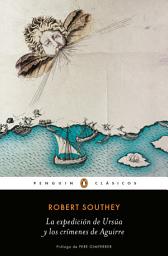
Robert Southey
Robert Southey (1774–1843) was an English poet, historian, biographer, and essayist. A contemporary and associate of the likes of Samuel Taylor Coleridge and William Wordsworth, Southey played a critical role in the development of English Romantic literature. He was born on August 12, 1774, in Bristol and educated at Westminster School in London and later at Balliol College, Oxford. Although less renowned than his fellow Lake Poets, his contribution to literature during the Romantic period was significant. His early verses exhibited a strong revolutionary spirit and a preoccupation with the gothic, which gradually gave way to a more nuanced portrayal of life and nature. Southey's 'Poems' published in 1799, showcased a collection of his lyrical works that demonstrate his early literary prowess. Beyond poetry, Southey made considerable strides in prose, authoring expansive biographies and engaging in historical narratives with works like 'The Life of Nelson' (1813) and the multivolume 'History of Brazil' (1810–1819). His later appointment as Poet Laureate in 1813 was a testament to his influence and the esteem in which he was held during his lifetime. Southey's literary style is noted for its fluidity, vivid imagery, and the infusion of historical and mythological motifs. Today, his work stands as a reflection of the intellectual and cultural currents that shaped the Romantic era in Britain.