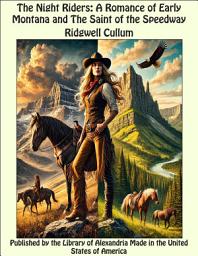
Ridgwell Cullum
Sidney Groves Burghard, a literary figure whose work quietly gleans the essence of early 20th-century Americana, is primarily known for his book 'The Bull Moose.' While little is widely known about Burghard's personal life or the breadth of his literary career, his work 'The Bull Moose' emerges as a reflection of the progressive political movement synonymous with the era and the indomitable figure of Theodore Roosevelt, who emblematically carried the Bull Moose moniker. Burghard's succinct narrative style intertwined with historical allusions presents a vivid tableau of the period, allowing readers insight into the political and social dynamics of the time. His writing bears the hallmarks of a thoughtful commentator on American culture, evidenced by the layered depictions within his texts. Although his literary footprint may not be as expansive as some of his contemporaries, Burghard's contributions capture the vibrancy and spirit of a nation poised on the cusp of modernization and change. The deliberate crafting in 'The Bull Moose' suggests a meticulous approach to storytelling, where each character and event is a cogent piece of the larger historical narrative he wishes to convey. As such, Sidney Groves Burghard may be regarded as a purveyor of historical literature, whose work merits inclusion in discussions of early 20th-century American authors who used their pen to sketch the contours of a nation's identity.
Ebooks