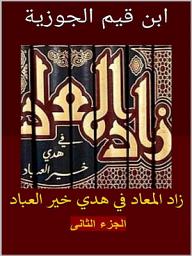
Shams Al-Din Ibn Qayyim Al-Jawziyyah
Shams al-Dīn ʾAbū ʿAbd Allāh Muḥammad ibn ʾAbī Bakr ibn ʾAyyūb al-Zurʿī al-Dimashqī al-Ḥanbalī, commonly known as Ibn Qayyim al-Jawziyya or Ibn al-Qayyim for short, or reverentially as al-Imam Ibn al-Qayyim in Sunni tradition, was an important medieval Syrian Arab Islamic jurist, theologian, and spiritual writer. Belonging to the Hanbali school of Fiqh, of which he is regarded as "one of the most important thinkers," Ibn al-Qayyim was also the foremost disciple and student of Ibn Taymiyya, with whom he was imprisoned in 1326 for dissenting against a established tradition during Ibn Taymiyya's famous incarceration in the Citadel of Damascus.
Of humble origin, Ibn al-Qayyim's father was the principal of the School of Jawziyyah, which also served as a court of law for the Hanbali judge of Damascus during the period. Ibn al-Qayyim went on to become a prolific scholar, producing a rich corpus of "doctrinal and literary" works.
Of humble origin, Ibn al-Qayyim's father was the principal of the School of Jawziyyah, which also served as a court of law for the Hanbali judge of Damascus during the period. Ibn al-Qayyim went on to become a prolific scholar, producing a rich corpus of "doctrinal and literary" works.
Ebooks