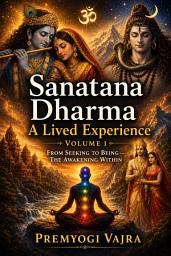
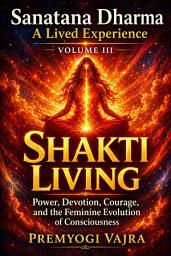
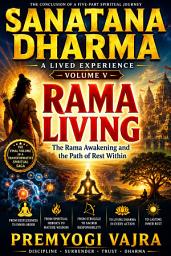
Sanatana Dharma – Lived Experience
About this ebook series
Series Introduction
Sanātana Dharma – Lived Experience
Sanātana Dharma – Lived Experience is not a scripture, a belief system, or a step-by-step spiritual guide. It is a living record of consciousness unfolding through ordinary human life.
This series explores spirituality as it is actually lived—through play, love, confusion, attraction, struggle, discipline, joy, fear, and inner silence—rather than through renunciation alone, blind belief, or rigid practice. It asks a simple but radical question: What happens when awareness is allowed to evolve naturally, through life itself?
Across its volumes, the series traces how consciousness matures in stages:
through līlā (play) before discipline,
through love and attraction before renunciation,
through experience before philosophy,
and through insight before instruction.
The narratives do not present ideals to imitate or truths to accept. Instead, they offer pattern recognition—a way to notice how life, when lived with honesty and awareness, quietly educates the inner being. Mythological language appears not as theology, but as psychology; not as belief, but as symbolic maps of lived reality.
Volume I explores early innocence and instinctive balance.
Volume II: Krishna Living focuses on consciousness learning through joy, charm, relationship, and rhythm rather than austerity. Later volumes move toward discipline, strength, clarity, and silence—without rejecting the human world.
Nothing here claims universality. Nothing is prescribed as a method. The writing remains simple because the experiences were simple. The insights are subtle because transformation rarely announces itself.
This series is written for readers who:
feel that spirituality should not deny life,
sense depth within ordinary experiences,
seek meaning without dogma,
and wish to understand why certain phases arise, mature, and pass.
Sanātana Dharma – Lived Experience is not about becoming something new.
It is about recognizing what has been quietly forming all along.
Read slowly.
Not to believe.
Not to disagree.
But to notice what resonates with your own lived experience.