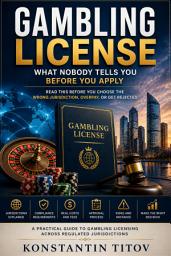
The Reality of Gambling Licensing
About this ebook series
The gambling industry is often presented as accessible, scalable, and highly profitable. In reality, entry into this market is tightly controlled, structurally complex, and frequently misunderstood.
The Reality of Gambling Licensing is a professional series written from a practical, execution-level perspective. It is not based on theoretical summaries, repackaged online materials, or second-hand interpretations of regulatory frameworks. It reflects real-world experience working with licensing processes, regulatory expectations, and client-side challenges.
Across multiple jurisdictions, this series explains:
How licensing actually works beyond official descriptions
Why many applicants rely on incomplete or misleading information
Where legal, financial, and procedural risks are underestimated
What regulators expect versus what applicants typically prepare
Why a significant number of applications fail or become unnecessarily expensive
Each book focuses on a specific jurisdiction or licensing environment, presenting a structured, realistic view of the process, including its limitations, constraints, and decision points.
A consistent pattern emerges across all markets:
Most problems do not come from regulation itself, but from how applicants approach it.
This series is written for:
Entrepreneurs entering the iGaming sector
Investors evaluating regulated gambling ventures
Operators expanding into new jurisdictions
Professionals seeking a clear and practical understanding of licensing
The purpose of this series is not to simplify the process, but to clarify it.
It is designed for readers who prefer informed decisions over assumptions, and structured execution over trial and error.