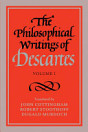
Discourse on the Method

· The Collected Works of René Descartes Book 3 · Minerva Press
Ebook
80
Pages
Eligible

About this ebook

A modern translation of Descartes' famous work "Discourse on Method". The full original title of this work was "Discourse on Method to lead one's reason well and to seek the truth in sciences plus Dioptric, Meteors and Geometry". This scholarly apparatus nests this work into Descartes' larger body of work and the place of his philosophy into the broader history of western ideology. Descartes' focus on clear, logical reasoning is a hallmark of his philosophy, and his influence on fields such as mathematics and physics is deep, with his work laying the foundation for later scientific advances. René Descartes' Cartesian Method is of great historical weight because it laid the foundation for modern scientific and philosophical inquiry.

Written in the early 17th century, these rules represent a turning point in Western thought, moving away from scholasticism, which relied heavily on Aristotelian traditions and church doctrines, and toward a method of inquiry based on reason and evidence. Descartes' approach emphasized systematic doubt and the use of methodical reasoning to uncover basic truths. This was radical at a time when philosophical inquiry was often intertwined with religious and metaphysical assumptions. Written as an intellectual autobiography, the text charts his journey from skepticism to certainty through the development of a new philosophical method based on systematic doubt. Here Descartes first presents his famous cogito argument "I think, so I am" as an unshakeable foundation for knowledge, though in a less formal manner than his later Meditations.

The work's accessibility masks its radical nature: by grounding certainty in individual reason rather than traditional authority, Descartes in practice undermines the entire edifice of medieval scholasticism while providing a new foundation for scientific knowledge. These rules were central to the development of the scientific method and influenced the way future generations of thinkers approached problems in both philosophy and science.

This edition contains a timeline of Descartes' life and works, a glossary of Cartesian terminology, and Afterword by the translator that explains the meaning of Descartes' work in modern philosophy and science, especially his method of skepticism and rationalism.

A modern translation of Descartes' famous work "Discourse on Method". The full original title of this work was "Discourse on Method to lead one's reason well and to seek the truth in sciences plus Dioptric, Meteors and Geometry". This scholarly apparatus nests this work into Descartes' larger bod...

Discover more

About the author

René Descartes (1596 to 1650) was a French philosopher, mathematician, and natural philosopher. He wrote on method, metaphysics, mathematics, optics, mechanics, physiology, and the passions; his books include Discourse on Method, Meditations on First Philosophy, and Principles of Philosophy.

Rate this ebook

Tell us what you think.

Reading information

Smartphones and tablets
Install the Google Play Books app for Android and iPad/iPhone. It syncs automatically with your account and allows you to read online or offline wherever you are.
Laptops and computers
You can listen to audiobooks purchased on Google Play using your computer's web browser.
eReaders and other devices
To read on e-ink devices like Kobo eReaders, you'll need to download a file and transfer it to your device. Follow the detailed Help Center instructions to transfer the files to supported eReaders.