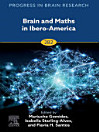
Insights from Educational Neuroscience and Serious Games in Math Learning

·
· Academic Press
Ebook
300
Pages
Eligible
This book will become available on April 15, 2027. You will not be charged until it is released.

About this ebook

Insights from Educational Neuroscience and Serious Games in Math Learning offers a compelling exploration of how mathematics learning develops through the dynamic interaction of brain development, cognition, emotion, language, environment, and technology. Drawing on neuroscience, psychology, education, and game-based learning research, the book explores how innovative technologies can improve achievement, engagement, and inclusion in mathematics education while addressing key challenges in developing and implementing effective serious games and emerging technologies for mathematics learning. With contributions from leading researchers and practitioners from around the world, each chapter presents complex ideas in an accessible and engaging way. The first section explores the relationships between mathematics learning and key factors, including executive functions, metacognition, spatial cognition, affective regulation, mathematics anxiety, and developmental dyscalculia. The second section examines the educational potential of digital games, artificial intelligence, adaptive technologies, embodied learning, and intelligent tutoring systems, from early childhood to higher education. Grounded in evidence-based practice, the volume bridges neuroscience and gaming to provide valuable insights for educators, researchers, policymakers, and developers shaping the future of mathematics learning through technology-driven innovation and impact. - Examines neuroscientific, cognitive, and developmental mechanisms underlying mathematical learning across the lifespan - Analyses social, emotional, and environmental influences on mathematical achievement and participation in diverse educational contexts - Evaluates the impact of educational technologies on mathematical development, including low attainment, mathematics anxiety, and developmental dyscalculia - Investigates the effectiveness of serious games, artificial intelligence, intelligent tutoring systems, adaptive technologies, embodied learning, and robotics in mathematics education
Insights from Educational Neuroscience and Serious Games in Math Learning offers a compelling exploration of how mathematics learning develops through the dynamic interaction of brain development, cognition, emotion, language, environment, and technology. Drawing on neuroscience, psychology, educ...

About the author

Flávia H. Santos, PhD, is an Associate Professor of Cognitive and Developmental Neuroscience based at the Institute of Education, University College London. Her research investigates mathematical cognition and the factors involved in developmental processes, individual differences, and academic outcomes. Her lab has been funded by Research Ireland, the European Commission, and the Leverhulme Trust to develop evidence-based interventions that address real-world educational challenges, such as low mathematics achievement, developmental dyscalculia, and mathematics anxiety. Santos is affiliated with the UK Centre for Educational Neuroscience and contributes to UNESCO Inclusive Policy Lab initiatives.

Nikolaus Conrad began his career in education, teaching before moving into the corporate world, where he spent years in IT management and data analytics, working with international companies on performance measurement and business systems. He returned to education in 2015, founding Headstart Technology, now a Microsoft Global Education Training Partner helping schools implement edtech in transformative ways. He holds a Master's in Knowledge-Based Entrepreneurship, examining how technology can reshape teaching and learning, and is involved in Erasmus+ projects connecting educators across Europe.
Flávia H. Santos, PhD, is an Associate Professor of Cognitive and Developmental Neuroscience based at the Institute of Education, University College London. Her research investigates mathematical cognition and the factors involved in developmental processes, individual differences, and academic o...

Reading information

Smartphones and tablets
Install the Google Play Books app for Android and iPad/iPhone. It syncs automatically with your account and allows you to read online or offline wherever you are.
Laptops and computers
You can listen to audiobooks purchased on Google Play using your computer's web browser.
eReaders and other devices
To read on e-ink devices like Kobo eReaders, you'll need to download a file and transfer it to your device. Follow the detailed Help Center instructions to transfer the files to supported eReaders.