About this ebook
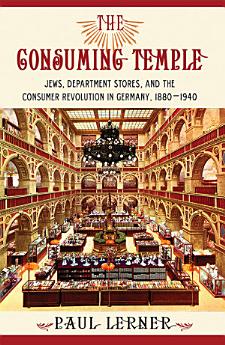
Drawing on fiction, political propaganda, commercial archives, visual culture, and economic writings, Lerner provides multiple perspectives on the department store, placing it in architectural, gender-historical, commercial, and psychiatric contexts. Noting that Jewish entrepreneurs founded most German department stores, he argues that Jews and "Jewishness" stood at the center of the consumer culture debate from the 1880s, when the stores first appeared, through the latter 1930s, when they were "Aryanized" by the Nazis. German responses to consumer culture and the Jewish question were deeply interwoven, and the "Jewish department store," framed as an alternative and threatening secular temple, a shrine to commerce and greed, was held responsible for fundamental changes that transformed urban experience and challenged national traditions in Germany's turbulent twentieth century.
Discover more
About the author
Paul Lerner is Associate Professor of History at the University of Southern California where he directs the Max Kade Institute for Austrian-German-Swiss Studies. He is the author of Hysterical Men: War, Psychiatry, and the Politics of Trauma in Germany, 1890–1930, also from Cornell, and coeditor of The Consuming Temple and Traumatic Pasts: History, Psychiatry, and Trauma in the Modern Age, 1870–1930.