Make: Physics
About this ebook
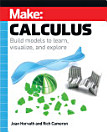
The authors include many experiments using maker-level materials like BBC micro:bit processors and 3D prints. These allow playing with concepts that are hard to learn from passive listening. Models and projects are designed to be hands-on, affordable, and friendly for homeschoolers, informal or enrichment education settings, and those teaching themselves these concepts. This book builds on the authors' book Make: Calculus, adding additional topics needed to support physics concepts.
Discover more
About the author
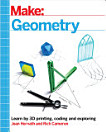
Joan Horvath is the co-founder of Nonscriptum, a consulting and training firm that teaches educators and scientists how to use maker tech. She is a recovering rocket scientist who spent 16 years at JPL and then another 20 as an entrepreneur. Joan is an alumna of MIT, and the co-author of Make: Geometry and Make: Calculus. She lives in Southern California.
Rich Cameron is the co-founder of Nonscriptum, a consulting and training firm that teaches educators and scientists how to use maker tech. He is an open-source 3D printer hacker who designed the RepRap Wallace and Bukito 3D printers, and the co-author of Make: Geometry and Make: Calculus. He lives in Southern California.