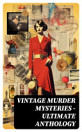
THE OBVIOUS CLUE - Ultimate Murder Mystery Collection: The Murders in the Rue Morgue, A Study in Scarlet, The Innocence of Father Brown, The Leavenworth Case, More Tish...
Charles Dickens · Edgar Allan Poe · Anna Katharine Green · Arthur Conan Doyle · Mary Roberts Rinehart · John Kendrick Bangs · Agatha Christie · Robert Barr · Ellis Parker Butler · Maurice Leblanc · Wilkie Collins · Edgar Wallace · Melville Davisson Post · R. Austin Freeman · A. E. W. Mason · E. W. Hornung · G. K. Chesterton · Victor L. Whitechurch
Nov 2023 · DigiCat
Ebook
7555
Pages
family_home
Eligible
info
About this ebook
THE OBVIOUS CLUE - Ultimate Murder Mystery Collection masterfully weaves an intricate tapestry of suspense and intrigue, immersing the reader in the intricacies of the murder mystery genre. This anthology spans a rich tapestry of literary styles, from deductive detective tales and locked-room puzzles to whodunits and psychological thrillers. Each story captivates through its unique exploration of the human psyche and the relentless quest for justice. Standout narratives within the collection showcase unexpected twists and a profound engagement with the theme of the obvious hidden in plain sight, drawing readers into a world where nothing is as it seems. The anthology brings together some of the most illustrious authors of the 19th and early 20th centuries, figures who helped define and evolve the murder mystery genre. Featuring the likes of Edgar Allan Poe, whose works laid the foundation, to Agatha Christie's ingenious plotting and the rational detective puzzles of Arthur Conan Doyle, the collection is a testament to a legacy of literary brilliance. The diverse origins and cultures of contributors like R. Austin Freeman, Mary Roberts Rinehart, and Maurice Leblanc reflect different historical and cultural influences that have shaped the genre over time, each bringing their distinctive voice and perspective. Embark on an unparalleled journey through this compendium of murder mysteries, offering an invaluable opportunity to explore a multiplicity of perspectives and styles within a single volume. Enrich your understanding of the genre's evolution and revel in the depth and breadth of its storytelling. THE OBVIOUS CLUE is an essential addition for enthusiasts and scholars alike, fostering a dialogue among the timeless works of its contributors, each contributing fresh insights and expanding the horizons of detective fiction.
THE OBVIOUS CLUE - Ultimate Murder Mystery Collection masterfully weaves an intricate tapestry of suspense and intrigue, immersing the reader in the intricacies of the murder mystery genre. This anthology spans a rich tapestry of literary styles, from deductive detective tales and locked-room puz...
Discover more
About the author
Charles Dickens (1812-1870) was a prolific English writer, whose name has become synonymous with Victorian literature. Although 'The Obvious Clue - Ultimate Murder Mystery Collection' does not align with the known titles from Dickens's bibliography, his celebrated oeuvre marks him as a literary icon. His novels are distinguished by his critical social commentary and memorable characters, exploring themes such as poverty, inequality, and the struggle for personal redemption. Renowned works like 'Oliver Twist' (1838), 'David Copperfield' (1850), 'A Tale of Two Cities' (1859), and 'Great Expectations' (1861)—to name a few—are hallmarks of his narrative prowess and his capacity for exploring both the bright and somber facets of human nature. Furthermore, works such as 'Bleak House' (1853) and 'The Mystery of Edwin Drood' (unfinished at his death in 1870) have intrigued readers with their intricate plots and suspenseful storytelling. Dickens's literary style is lauded for its rich descriptions, satirical wit, and vibrant use of language. His contribution to English literature is immense, influencing countless authors and leaving a legacy celebrated through adaptations, scholarly work, and continued readership worldwide.
Charles Dickens (1812-1870) was a prolific English writer, whose name has become synonymous with Victorian literature. Although 'The Obvious Clue - Ultimate Murder Mystery Collection' does not align with the known titles from Dickens's bibliography, his celebrated oeuvre marks him as a literary i...
Rate this ebook
Tell us what you think.
Reading information
Smartphones and tablets
Install the Google Play Books app for Android and iPad/iPhone. It syncs automatically with your account and allows you to read online or offline wherever you are.
Laptops and computers
You can listen to audiobooks purchased on Google Play using your computer's web browser.
eReaders and other devices
To read on e-ink devices like Kobo eReaders, you'll need to download a file and transfer it to your device. Follow the detailed Help Center instructions to transfer the files to supported eReaders.