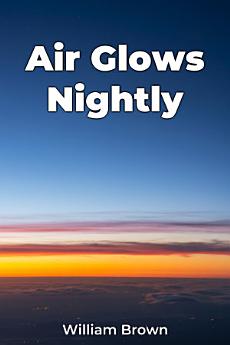
Air Glows Nightly
About this ebook
The book examines the physics and chemical reactions that cause airglow, detailing how scientists observe and analyze this phenomenon. It highlights how spectroscopic measurements and satellite observations have revolutionized our understanding. For instance, airglow studies reveal how solar activity affects the excitation and de-excitation processes of atmospheric components like oxygen and nitrogen.
By understanding these processes, we can better validate atmospheric models and understand similar phenomena on other planets. The text progresses from basic concepts in physics and chemistry to observational techniques and applications, connecting airglow research to fields like astrophysics, environmental science, and remote sensing.
Air Glows Nightly distinguishes itself by offering a comprehensive yet accessible overview of airglow physics, incorporating recent findings and practical examples, making it a valuable resource for students, researchers, and anyone interested in atmospheric science and physics.


