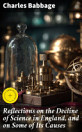
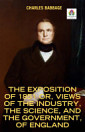
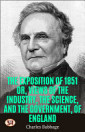
Reflections on the Decline of Science in England: Restored Classics to Go Edition
About this ebook
Discover more
About the author
Charles Babbage was an English mathematician, inventor, and visionary thinker born in 1791, best known today as one of the great pioneers of computing and a restless critic of the scientific culture of his time. Educated at Cambridge, he became deeply involved in mathematics, engineering, and public reform, and spent much of his life pursuing ambitious mechanical designs that anticipated the modern computer. Alongside his technical work, he wrote influential nonfiction that examined the state of science, industry, and intellectual life in Britain, arguing for better support of research, more rigorous methods, and a stronger partnership between knowledge and practical progress. His writing often returns to themes of efficiency, precision, innovation, and the social responsibility of science, ideas that remain strikingly relevant in an age shaped by technology, data, and debates over how expertise should serve the public good. Babbage's legacy lies not only in his mechanical foresight but in his insistence that scientific progress depends on institutions, incentives, and imagination working together. Modern readers still find him compelling because he speaks to enduring questions about innovation, bureaucracy, and the future of human ingenuity. He will especially appeal to readers interested in the history of science, the origins of computing, and thoughtful arguments about how societies nurture discovery.