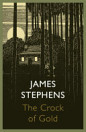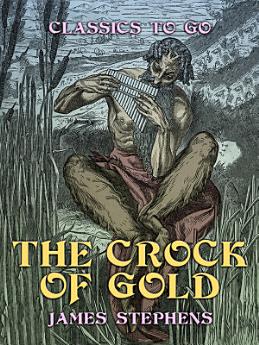
The Crock of Gold
May 2022 · Otbebookpublishing
Ebook
129
Pages
family_home
Eligible
info
About this ebook
The Crock of Gold is a comic novel written by Irish author James Stephens, first published in 1912. An intriguing fantasy involving fairies, policemen, philosophers and pagan gods.
The Crock of Gold is a comic novel written by Irish author James Stephens, first published in 1912. An intriguing fantasy involving fairies, policemen, philosophers and pagan gods.
Discover more
About the author
James Stephens, born on February 9, 1880, in Dublin, Ireland, was a multifaceted literary figure whose work straddled the realms of poetry, fiction, and folklore. Raised in a tumultuous period marked by Ireland's struggle for independence, Stephens' writings often reflected the rich cultural tapestry and political fervor of his homeland. His early life was marked by hardship; orphaned at a young age, he was adopted by a family who nurtured his burgeoning literary talents.Stephens' literary career took off with his unique blend of lyrical prose and deep-rooted Irish mythology, capturing the imaginations of readers and critics alike. His works are celebrated for their whimsical yet profound exploration of human nature, often infused with a sense of mysticism and a deep appreciation for the natural world. A contemporary and friend of James Joyce, Stephens was part of the vibrant literary scene in early 20th-century Dublin. His influence extended to the likes of W.B. Yeats and other members of the Irish Literary Revival, a movement dedicated to the resurgence of Irish literature and culture. Not one to shy away from controversy, Stephens was an outspoken advocate for Irish nationalism, and his works frequently echoed his revolutionary ideals. His involvement in the 1916 Easter Rising, although more symbolic than active, cemented his status as a cultural icon committed to the cause of Irish independence.James Stephens' legacy endures through his innovative narrative style and his unwavering dedication to preserving and celebrating Irish heritage. His contributions continue to inspire contemporary writers who seek to blend folklore with modern literary techniques, ensuring that his voice resonates through the ages.
James Stephens, born on February 9, 1880, in Dublin, Ireland, was a multifaceted literary figure whose work straddled the realms of poetry, fiction, and folklore. Raised in a tumultuous period marked by Ireland's struggle for independence, Stephens' writings often reflected the rich cultural tape...
Rate this ebook
Tell us what you think.
Reading information
Smartphones and tablets
Install the Google Play Books app for Android and iPad/iPhone. It syncs automatically with your account and allows you to read online or offline wherever you are.
Laptops and computers
You can listen to audiobooks purchased on Google Play using your computer's web browser.
eReaders and other devices
To read on e-ink devices like Kobo eReaders, you'll need to download a file and transfer it to your device. Follow the detailed Help Center instructions to transfer the files to supported eReaders.