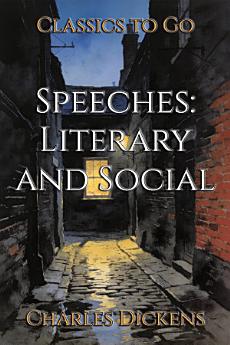
Speeches: Literary and Social: Restored Classics to Go Edition
About this ebook
Discover more
About the author
Charles Dickens was born in 1812 in Portsmouth, England, and came of age in a world shaped by rapid industrial change, deep social inequality, and the harsh realities of Victorian life. His own childhood included poverty and hardship, experiences that left a lasting mark on his imagination and helped make him one of literature's most compassionate observers of ordinary people. Rising first as a journalist and then as a novelist, he became the most celebrated English writer of his era, admired for his vivid characters, energetic storytelling, and unmatched ability to blend humor with moral urgency. Alongside his fiction, his public speeches and essays reveal a writer deeply engaged with the social questions of his time, especially the treatment of the poor, the failures of institutions, and the need for reform and empathy. Dickens's work continues to resonate because it captures the human cost of inequality, the resilience of families and communities, and the struggle to preserve dignity in difficult circumstances. His legacy endures not only in the unforgettable people he created, but also in the way he taught readers to care about justice, compassion, and the lives often overlooked by society. Today, he remains especially rewarding for readers who enjoy rich storytelling, memorable characters, and literature that combines entertainment with a powerful social conscience.