About this ebook
Empires and their aftermaths were massive planning institutions; in the past two hundred years, the natural and social sciences emerged—at least in part—as modes of knowledge production for imperial planning. Yet these connections are frequently under-emphasized in the history of science and its corollary fields.
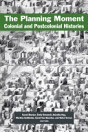
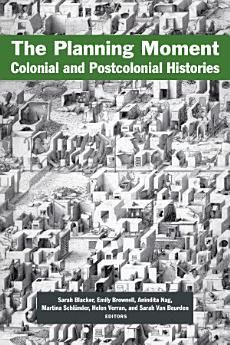
The Planning Moment explores the myriad ways plans and planning practices pervade recent global history. The book is built around twenty-seven brief case studies that explore the centrality of planning in colonial and postcolonial environments, relationships, and contexts, through a range of disciplines: the history of science, science and technology studies, colonial and postcolonial studies, urban studies, and the history of knowledge.
If colonialism made certain landscapes, populations, and institutions legible while obscuring others, The Planning Moment reveals the frequently disruptive and violent processes of erasure in imperial planning by examining how “common sense” was produced and how the intransigence of planning persists long after decolonization. In recognizing the resistance and subversion that often met colonial plans, the book makes visible a range of strategies and techniques by which planning was modified and reappropriated, and by which decolonial futures might be imagined.
Contributors: Itty Abraham, Benjamin Allen, Sarah Blacker, Emily Brownell, Lino Camprubí, John DiMoia, Mona Fawaz, Lilly Irani, Chihyung Jeon, Robert Kett, Monika Kirloskar-Steinbach, Karen McAllister, Laura Mitchell, Gregg Mitman, Aaron Moore (†), Nada Moumtaz, Tahani Nadim, Anindita Nag, Raúl Necochea López, Tamar Novick, Benjamin Peters, Juno Salazar Parreñas, Martina Schlünder, Sarah Van Beurden, Helen Verran, Ana Carolina Vimieiro Gomes, Alexandra Widmer, and Alden Young
Empires and their aftermaths were massive planning institutions; in the past two hundred years, the natural and social sciences emerged—at least in part—as modes of knowledge production for imperial planning. Yet these connections are frequently under-emphasized in the history of science and its ...
Discover more
About the author
Sarah Blacker (Edited By)
Sarah Blacker is a Sessional Assistant Professor in the Department of Social Science at York University, Toronto.
Emily Brownell (Edited By)
Emily Brownell is a Senior Lecturer in Environmental History at the University of Edinburgh.
Anindita Nag (Edited By)
Anindita Nag is Associate Professor and the Associate Dean of International Affairs at the Jindal School of Art and Architecture, New Delhi.
Martina Schlünder (Edited By)
Martina Schlünder is a Research Scholar at the Max Planck Institute for the History of Science and a visiting associate professor of Science and Technology Studies at the Center for Technology, Innovation, and Culture at the University of Oslo.
Helen Verran (Edited By)
Helen Verran taught history and philosophy of science at University of Melbourne Australia, for nearly twenty-five years. Since 2012 she has been Research Professor at Charles Darwin University. Verran’s book Science and an African Logic (University of Chicago Press, 2001) was awarded the Society for the Social Studies of Science’s Ludwik Fleck Prize in 2003.
Sarah Van Beurden (Edited By)
Sarah Van Beurden is Associate Professor History and African American and African Studies at the Ohio State University.
Dagmar Schäfer (Foreword By)
Dagmar Schäfer is Director of Department III, “Artifacts, Action, Knowledge,” at the Max Planck Institute for the History of Science in Berlin.
Sarah Blacker (Edited By)
Sarah Blacker is a Sessional Assistant Professor in the Department of Social Science at York University, Toronto.
Emily Brownell (Edited By)
Emily Brownell is a Senior Lecturer in Environmental History at the University of Edinburgh.
Anindita Nag (Edited By)
Anindit...
Rate this ebook
Tell us what you think.
Reading information
Smartphones and tablets
Install the Google Play Books app for Android and iPad/iPhone. It syncs automatically with your account and allows you to read online or offline wherever you are.
Laptops and computers
You can listen to audiobooks purchased on Google Play using your computer's web browser.
eReaders and other devices
To read on e-ink devices like Kobo eReaders, you'll need to download a file and transfer it to your device. Follow the detailed Help Center instructions to transfer the files to supported eReaders.