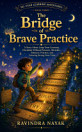
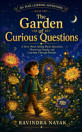
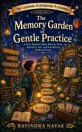
About this ebook
Every mistake has prepared them.
Every mystery has been pointing to one final door.
After facing the lost answers, the map of mistakes, the museum of hidden questions, and the carnival of easy answers, Mira, Dev, and Tara believe Bellwick is safe at last. But when the Question Key begins glowing without being touched, they discover a final message carved into the old library floor:
The last door opens only for the mind that no longer runs from itself.
Soon, strange signs appear across Bellwick. Mirrors show memories instead of reflections. Clocks pause at impossible hours. Books open to pages the children have never written. And at the edge of town, where no path should exist, a silent door appears.
Behind it is not a monster.
Not a villain.
Not a simple answer.
Behind it is the hardest mystery of all: the truth each child has been avoiding.
Mira must face the fear that she is only brave when others believe in her. Dev must discover that intelligence without humility can become a locked room. Tara must learn that questions are powerful—but only when they are followed by action.
As Bellwick begins to fade between memory and reality, the children realize the final mystery is not about saving a library, a map, a museum, or a town.
It is about saving the courage to grow.
The Last Door of Bellwick is the powerful final book in The Question Key Mysteries, a magical mystery adventure series about thinking clearly, learning bravely, asking better questions, and building confidence from within. This final volume brings the children face-to-face with the deepest lesson of the series:
The strongest key is not the one you hold in your hand.
It is the one you build inside your mind.
Perfect for young readers, parents, teachers, and lifelong learners who enjoy magical doors, hidden clues, emotional twists, brave friendships, and stories that make children think, feel, and grow.
A magical mystery finale where children discover that answers guide the mind, mistakes shape the path, questions open the door, and true confidence begins within.
A magical mystery finale where children discover that answers guide the mind, mistakes shape the path, questions open the door, and true confidence begins within.
Suspense Bridge to Next Series
At the end of The Last Door of Bellwick, the children discover that the Question Key was only the first kind of key.
A new symbol appears: an inner compass.
It does not point north.
It points inward.
This opens the next 5-book self-help series:
The Inner Compass Series
Book 1: The Compass That Pointed Inside
Theme: self-awareness, knowing your thoughts, understanding emotions.
Book 2: The Mountain of Small Steps
Theme: discipline, patience, habit-building, slow growth.
Book 3: The River of Brave Choices
Theme: decision-making, courage, values, responsibility.
Book 4: The Mirror of Quiet Strength
Theme: confidence, self-respect, emotional resilience.
Book 5: The Sky Beyond Fear
Theme: purpose, future-readiness, growth mindset, becoming your own guide.
About the author
Ravindra Kumar Nayak (b. 1990) is an Indian philosopher, an Engineer, AI researcher, and poet. he seamlessly blends analytical rigor with artistic expression. His work delves into the intersections of human consciousness, technology, and the beauty of nature. A visionary thinker and creative adventurer, Ravindra thrives on exploring untrodden ideas and pushing boundaries.
His poetry and essays have been featured in The Porcupine Magazine, Banta91, and the Pepperoni Pizza Poetry Anthology. Deeply passionate about the ethical dimensions of artificial intelligence, he seeks to harmonize cutting-edge innovation with humanistic values.
A passionate digital architect and storyteller, Ravindra combines technology, psychology, and fantasy to make learning both engaging and unforgettable. Discover his writings at www.bantaa91.com — where philosophy, poetry, and progress converge.
Being a researcher, writer, and practitioner interested in how people think, decide, and misunderstand problems in everyday life.
His work focuses on first-principles reasoning, decision-making under uncertainty, and the gap between intelligence and clarity. Rather than offering techniques or shortcuts, he explores how assumptions, habits, and unexamined beliefs quietly shape outcomes across careers, relationships, health, and learning.
Ravindra’s writing is grounded in observation, dialogue, and lived experience. He believes that most problems persist not because they are complex, but because they are framed incorrectly.
Through his books, he aims to help readers slow down their thinking, ask better questions, and develop a steadier relationship with uncertainty.
He writes with the belief that clarity is not loud, speed is not wisdom, and understanding is something built patiently over time.
Follow him for more AI adventures and productivity hacks.