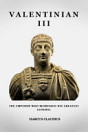
GRATIAN: THE YOUNG EMPEROR WHO REFUSED THE PAGAN ALTAR
About this ebook
He was sixteen when his father dropped dead in a rage during a diplomatic meeting, and the entire Roman Empire landed on his shoulders.
Born in Sirmium on 18 April 359 CE, Gratian had been proclaimed Augustus at just eight years old by his father Valentinian I, a soldier-emperor who understood that imperial power had to be taught young or not at all. By 375 CE, the lessons were over. The real thing had begun.
What Gratian did with his authority stunned the Roman world. He refused the ancient title of Pontifex Maximus, the supreme religious office every emperor since Augustus had held without question. Then he went further. He removed the Altar of Victory from the Roman Senate chamber, the sacred symbol of Rome's military greatness that had stood at the center of Roman civic life for centuries. In doing so, this young ruler announced, with the confidence of someone twice his age, that the old world was finished.
This is the story of how one emperor, working alongside Bishop Ambrose of Milan and co-emperor Theodosius I, redirected the entire cultural machinery of Rome from a civilization built on a thousand-year-old pagan tradition toward the Christian institutional framework that would define Western Europe for the next millennium. The Council of Constantinople in 381 CE. The dismantling of pagan priestly privileges. The systematic redirection of imperial resources from Roman temples to Christian churches. These were not timid administrative shuffles. They were acts of deliberate, irreversible civilizational redesign.
Then came Magnus Maximus, the ambitious British commander who understood that Gratian's political base was cracking. By 383 CE, the emperor who had dared to reshape Rome was dead at twenty-four, outmaneuvered and abandoned by the very constituencies his reforms had unsettled.
Drawing on Ammianus Marcellinus, Zosimus, and a full range of modern scholarship including Peter Brown's work on late antiquity, Neil McLynn's Ambrose of Milan (University of California Press, 1994), and Theodor Mommsen's foundational Roman histories, author Marcus Claudius puts Gratian back where he belongs: not as a footnote between greater emperors, but as the man who pulled the first and most consequential stone from the foundation of ancient Roman religion.
For readers of Roman Imperial history, this is the book that fills the gap between Constantine and Theodosius with the full, gripping account it has always deserved.