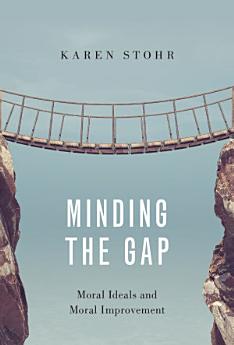
Minding the Gap: Moral Ideals and Moral Improvement
Sep 2019 · Oxford University Press
Ebook
304
Pages
family_home
Eligible
info
About this ebook
Most of us care about being a good person. Most of us also recognize that we fall far short of our morals aspirations, that there is a gap between what we are like and what we think we should be like. The aim of moral improvement is to narrow that gap. And yet as a practical undertaking, moral improvement is beset by difficulties. We are not very good judges of what we are like and we are often unclear about what it would mean to be better. This book aims to give an honest account of moral improvement that takes seriously the challenges that we encounter--the practical and philosophical--in trying to make ourselves morally better. Ethical theories routinely present us with accounts of ideal moral agents that we are supposed to emulate. These accounts, however, often lack normative authority for us and they may also fail to provide us with adequate guidance about how to live in our flawed moral reality. Stohr presents moral improvement as a project for non-ideal persons living in non-ideal circumstances. An adequate account of moral improvement must have psychologically plausible starting points and rely on ideals that are normatively authoritative and regulatively efficacious for the person trying to emulate them. Moral improvement should be understood as the project of articulating and inhabiting an aspirational moral identity. That identity is cultivated through existing practical identities and standpoints, which are fundamentally social and which generate practical conflicts about how to live. The success of moral improvement depends on it taking place within what she calls good "moral neighborhoods." Moral neighborhoods are collaborative normative spaces, constructed from networks of social practices and conventions, in which we can articulate and act as better versions of ourselves. The book concludes with a discussion of three social practices that contribute to good moral neighborhoods, and so to moral improvement.
Most of us care about being a good person. Most of us also recognize that we fall far short of our morals aspirations, that there is a gap between what we are like and what we think we should be like. The aim of moral improvement is to narrow that gap. And yet as a practical undertaking, moral im...
About the author
Karen Stohr is the Ryan Family Term Associate Professor of Metaphysics and Moral Philosophy at Georgetown University and Senior Research Scholar in Georgetown's Kennedy Institute of Ethics. She works primarily in normative ethical theory, focusing on Aristotelian virtue ethics and Kantian ethics. She also writes on the ethical dimensions of civility, manners, and social interactions. She is author of On Manners (Routledge, 2011).
Karen Stohr is the Ryan Family Term Associate Professor of Metaphysics and Moral Philosophy at Georgetown University and Senior Research Scholar in Georgetown's Kennedy Institute of Ethics. She works primarily in normative ethical theory, focusing on Aristotelian virtue ethics and Kantian ethics....
Rate this ebook
Tell us what you think.
Reading information
Smartphones and tablets
Install the Google Play Books app for Android and iPad/iPhone. It syncs automatically with your account and allows you to read online or offline wherever you are.
Laptops and computers
You can listen to audiobooks purchased on Google Play using your computer's web browser.
eReaders and other devices
To read on e-ink devices like Kobo eReaders, you'll need to download a file and transfer it to your device. Follow the detailed Help Center instructions to transfer the files to supported eReaders.