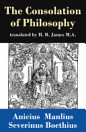
About this ebook
In "The Consolation of Philosophy," translated by Walter John Sedgefield, Boethius presents a poignant exploration of the nature of happiness, fate, and the human condition during his unjust imprisonment. Written in the early sixth century, this philosophical treatise takes the form of a dialogue between Boethius and Lady Philosophy, who personifies wisdom. The work is characterized by its blend of classical philosophy and poetic expression, reflecting the intellectual currents of late antiquity and the early medieval period. Through its compelling arguments and lyrical prose, Boethius navigates themes of fortune, virtue, and the transience of power, ultimately seeking solace in reason and divine order amidst personal despair. Boethius, a Roman philosopher and statesman, was profoundly influenced by his own societal upheaval and the challenges of his time, particularly the decline of the Roman Empire. His deep engagement with both Platonic and Aristotelian thought shaped his worldview, making "The Consolation of Philosophy" a seminal work that has resonated through the ages. Boethius's rich background in philosophy, rhetoric, and sacred literature underscores his desire to reconcile faith and reason. This timeless philosophical narrative is a must-read for anyone seeking to understand the intricacies of human suffering and the pursuit of true happiness. Boethius's insights remain relevant today, offering a thoughtful roadmap for readers grappling with existential questions in a turbulent world. Sedgefield's translation captures the essence of Boethius's work, making it accessible for contemporary audiences. Embrace this profound journey toward peace and enlightenment.
In "The Consolation of Philosophy," translated by Walter John Sedgefield, Boethius presents a poignant exploration of the nature of happiness, fate, and the human condition during his unjust imprisonment. Written in the early sixth century, this philosophical treatise takes the form of a dialogue...
About the author
Anicius Manlius Severinus Boethius (c. 477–524 AD) was a philosopher of the early 6th century, a figure profoundly influential in the Medieval and early Renaissance periods. Boethius was born to an aristocratic Roman family and held the high office of consul under the Ostrogothic king Theodoric the Great. His educational pursuits and political career were remarkable, but it is his intellectual legacy for which Boethius is most remembered. His most celebrated work, 'The Consolation of Philosophy' (translated by Walter John Sedgefield), has been a cornerstone in the history of Western thought, providing solace and insight into the human condition with its unique blend of poetry and philosophical discourse. Written while Boethius was unjustly imprisoned before his execution, the work contemplates fate, free will, and good versus evil, with the personification of Lady Philosophy as his guide. Boethius's synthesis of classical, Christian, and pre-Christian thought has had a lasting effect on Christian theology, particularly through his logical and linguistic writings. His efforts to translate and comment on the complete works of Plato and Aristotle, although incomplete, served as a crucial conduit of ancient philosophy to later generations. His literary style, which seamlessly weaves together prose and verse, remains a poignant exploration of wisdom and emotion, profoundly shaping Medieval and Renaissance humanism.
Anicius Manlius Severinus Boethius (c. 477–524 AD) was a philosopher of the early 6th century, a figure profoundly influential in the Medieval and early Renaissance periods. Boethius was born to an aristocratic Roman family and held the high office of consul under the Ostrogothic king Theodoric t...
Rate this ebook
Tell us what you think.
Reading information
Smartphones and tablets
Install the Google Play Books app for Android and iPad/iPhone. It syncs automatically with your account and allows you to read online or offline wherever you are.
Laptops and computers
You can listen to audiobooks purchased on Google Play using your computer's web browser.
eReaders and other devices
To read on e-ink devices like Kobo eReaders, you'll need to download a file and transfer it to your device. Follow the detailed Help Center instructions to transfer the files to supported eReaders.