The Aisle Between: A Novel
About this ebook
It should be simple. It is not. Maya Iyer is the only daughter of a Tamil household in Matunga, where the kitchen goes quiet when it disapproves. Arjun Jadhav is the only son of a Maratha home in Pune, where a mother guards her music like a border. Between two families, two languages and two kitchens, this marriage will have to be built, not inherited.
The Aisle Between is the story of that building — fifty years of it. From the teak and lamplight of a Fort bookstore to San Francisco and back to Bombay; through the birth of children and the loss of parents; through a secret that nearly breaks them and a temptation that must be named before it can be closed; through quarrels, long silences, and the slow, daily, unglamorous art of staying. Told in restrained, closely observed prose, it is a novel about the distances that open inside even a good marriage — and the small bridges two people build, word by word, to cross them.
Tender, quietly epic, and unafraid of feeling, it asks the question every long love must answer: how do two people remain a "we"?
Discover more
About the author
Krishna Prasad Sundaram is an author of classical literature. His work returns the great classical texts of love and devotion to the general reader — rendered as living stories, in plain contemporary English, without footnotes standing between the reader and the feeling.
He has spent more than two decades in information technology, where he works today in enterprise data management, and he lives and writes in Kuwait. The discipline shows in the prose: exact, patient, quietly architectural.
The Aisle Between is his first novel. It grew out of a simple conviction — that the fifty-year marriage, the kind our grandparents took for granted and our generation treats as a miracle, deserves the same close attention literature gives to first love and to heartbreak. He wrote it for every reader who has ever wondered what happens after the wedding: the treaties between families, the secrets and their repayments, the quarrels that season a marriage instead of ending it, and the tenderness that outlasts every argument.
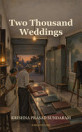
He is also the author of Emerald Flowers, a retelling of two hundred and fifty classical love poems as stories, each with its own painted scene. He writes under the Simha Foundry imprint, where his books share one belief: that the oldest ideas about love are still the most accurate, and that they belong to everyone.