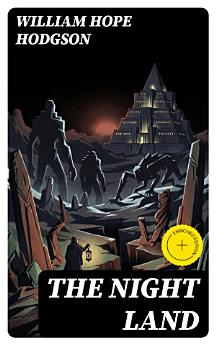
The Night Land: Enriched edition.
William Hope Hodgson
Sep 2022 · DigiCat
Ebook
430
Pages
family_home
Eligible
info
About this ebook
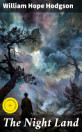
William Hope Hodgson's "The Night Land" is a pioneering work of weird fiction that masterfully fuses elements of horror and fantasy, immersing readers in a haunting and mesmerizing narrative. Set in a distant, post-apocalyptic future where the sun has died and the earth is cloaked in darkness, the novel follows the protagonist's treacherous journey through a nightmarish landscape filled with monstrous entities and surreal phenomena. Hodgson's distinctive style employs a richly descriptive, archaic language that echoes the gothic traditions while invoking a profound sense of dread and existential contemplation, reflecting the early 20th-century concerns with cosmic horror and the unknown. Hodgson, influenced by his experiences at sea and the tumultuous state of the world during his lifetime, often grappled with themes of isolation and humanity's insignificance in the face of a cosmic universe. His background in both literature and the practicalities of life—having served as a sailor and a writer—imbued his work with a visceral understanding of desolation and the human condition. "The Night Land" stands as a testament to Hodgson's imaginative prowess and his ability to convey deep philosophical inquiries through the lens of speculative fiction. For avid readers of horror, fantasy, or philosophical literature, "The Night Land" is an essential exploration of the darkest corners of the human psyche and the universe itself. This compelling narrative invites readers to confront their fears and question the nature of reality, making it a rewarding and unsettling experience that echoes long after the last page is turned. In this enriched edition, we have carefully created added value for your reading experience: - A succinct Introduction situates the work's timeless appeal and themes. - The Synopsis outlines the central plot, highlighting key developments without spoiling critical twists. - A detailed Historical Context immerses you in the era's events and influences that shaped the writing. - A thorough Analysis dissects symbols, motifs, and character arcs to unearth underlying meanings. - Reflection questions prompt you to engage personally with the work's messages, connecting them to modern life. - Hand‐picked Memorable Quotes shine a spotlight on moments of literary brilliance. - Interactive footnotes clarify unusual references, historical allusions, and archaic phrases for an effortless, more informed read.
William Hope Hodgson's "The Night Land" is a pioneering work of weird fiction that masterfully fuses elements of horror and fantasy, immersing readers in a haunting and mesmerizing narrative. Set in a distant, post-apocalyptic future where the sun has died and the earth is cloaked in darkness, th...
Discover more
About the author
William Hope Hodgson was a prolific English writer who left a profound impact primarily in the realms of science fiction, horror, and fantasy. Born on November 15, 1877, in Blackmore End, Essex, he ran away from a troubled apprenticeship to sea at the age of thirteen, an experience that deeply influenced his subsequent literary work. This maritime background features prominently in many of his tales, contributing to the authenticity of his sea stories – especially his series of nautical tales featuring the character Captain Gault. However, it is his foray into speculative fiction that has earned him lasting acclaim. Hodgson's novel 'The Night Land' (1912) is considered a landmark work in the genre, notable for its richly imagined post-apocalyptic world where the sun has died, and humanity resides in a massive metal pyramid known as the Last Redoubt. Despite being a work of early 20th-century literature, 'The Night Land' stands out for its imaginative scope and unique vision of a future Earth. Its archaic style and language, while challenging for some readers, contribute to a palpable sense of antiquity and alienness. Hodgson's continued influence on modern horror and science fiction is evident, with authors like H.P. Lovecraft acknowledging his contribution to the craft. Tragically, Hodgson's life was cut short when he died in World War I in 1918, but his written legacy continues to inspire and terrify readers to this day.
William Hope Hodgson was a prolific English writer who left a profound impact primarily in the realms of science fiction, horror, and fantasy. Born on November 15, 1877, in Blackmore End, Essex, he ran away from a troubled apprenticeship to sea at the age of thirteen, an experience that deeply in...
Rate this ebook
Tell us what you think.
Reading information
Smartphones and tablets
Install the Google Play Books app for Android and iPad/iPhone. It syncs automatically with your account and allows you to read online or offline wherever you are.
Laptops and computers
You can listen to audiobooks purchased on Google Play using your computer's web browser.
eReaders and other devices
To read on e-ink devices like Kobo eReaders, you'll need to download a file and transfer it to your device. Follow the detailed Help Center instructions to transfer the files to supported eReaders.