The State and Revolution
Vladimir Ilyich Lenin
Aug 2022 · DigiCat
Ebook
102
Pages
family_home
Eligible
info
About this ebook
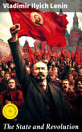
In "The State and Revolution," Vladimir Ilyich Lenin intricately examines the relationship between the state and the proletariat, arguing that the state is an instrument of class oppression. Written amidst the tumult of the early 20th century, Lenin employs a dialectical materialist approach reminiscent of Marx's theories, critiquing liberal notions of the state and advocating for its dismantlement by the working class. His succinct yet profound style captures the urgency of revolutionary thought, situating the text within the broader context of Marxism's evolution and its application to the socio-political landscape of Russia. Lenin's work serves as both a theoretical treatise and a practical guide for revolutionaries seeking to grasp the necessity of state power as a temporary means to achieve the dictatorship of the proletariat. Lenin, a pivotal figure in the socialist movement, was profoundly influenced by the socio-political upheavals of his time. His personal experiences and the failures of previous revolutions galvanized him to elucidate the mechanisms that sustain capitalist states. By incorporating historical examples and philosophical discourse, Lenin not only aimed to inspire action but also to provide a framework for understanding the transformative potential of the working class. For readers interested in revolutionary theory, political science, or the history of socialism, "The State and Revolution" is an indispensable text. It challenges readers to consider the nature of state power and its implications for societal change, making it essential for anyone seeking to understand the dynamics of class struggle and the path toward emancipation.
In "The State and Revolution," Vladimir Ilyich Lenin intricately examines the relationship between the state and the proletariat, arguing that the state is an instrument of class oppression. Written amidst the tumult of the early 20th century, Lenin employs a dialectical materialist approach remi...
Discover more
About the author
Vladimir Ilyich Lenin, born Vladimir Ilyich Ulyanov on April 22, 1870, in Simbirsk, Russian Empire, was a revolutionary, political theorist, and leader who served as the head of government of Soviet Russia from 1917 to 1924 and of the Soviet Union from 1922 to 1924. Under his administration, Russia became the Soviet Union, the world's first socialist state. He was a founding father of Marxism-Leninism, an ideology developed upon his namesake and theories. Lenin's contribution to political science and his revolutionary activities have branded him a significant and controversial figure in world history. Lenin's work was extensive and influential. Among his literary contributions, 'The State and Revolution', written in 1917, stands out as a critical text of his thought and strategy. In this seminal work, Lenin discusses the role of the state in society, the necessity of proletarian revolution, and the transition from a bourgeois state to a communist society free from class structure. His writings display an unyielding commitment to Marxist theory, elucidating his view of the state as a tool for class oppression and his conviction that it could be used to construct a stateless, classless society. Lenin's theoretical contributions and the practical applications of his strategies left a lasting imprint on the political landscape of the 20th century, influencing revolutionary movements worldwide.
Vladimir Ilyich Lenin, born Vladimir Ilyich Ulyanov on April 22, 1870, in Simbirsk, Russian Empire, was a revolutionary, political theorist, and leader who served as the head of government of Soviet Russia from 1917 to 1924 and of the Soviet Union from 1922 to 1924. Under his administration, Russ...
Rate this ebook
Tell us what you think.
Reading information
Smartphones and tablets
Install the Google Play Books app for Android and iPad/iPhone. It syncs automatically with your account and allows you to read online or offline wherever you are.
Laptops and computers
You can listen to audiobooks purchased on Google Play using your computer's web browser.
eReaders and other devices
To read on e-ink devices like Kobo eReaders, you'll need to download a file and transfer it to your device. Follow the detailed Help Center instructions to transfer the files to supported eReaders.