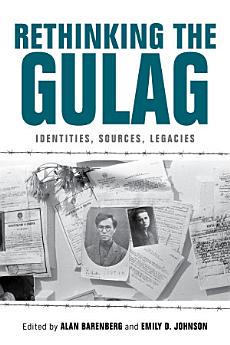
Rethinking the Gulag: Identities, Sources, Legacies

·
· Indiana University Press
Ebook
320
Pages
Tools
Eligible

About this ebook

The Soviet Gulag was one of the largest, most complex, and deadliest systems of incarceration in the 20th century. What lessons can we learn from its network of labor camps and prisons and exile settlements, which stretched across vast geographic expanses, included varied institutions, and brought together inmates from all the Soviet Union's ethnicities, professions, and social classes?

Drawing on a massive body of documentary evidence, Rethinking the Gulag: Identities, Sources, Legacies explores the Soviet penal system from various disciplinary perspectives. Divided into three sections, the collection first considers "identities"—the lived experiences of contingents of detainees who have rarely figured in Gulag histories to date, such as common criminals and clerics. The second section surveys "sources" to explore the ways new research methods can revolutionize our understanding of the system. The third section studies "legacies" to reveal the aftermath of the Gulag, including the folk beliefs and traditions it has inspired and the museums built to memorialize it. While all the chapters respond to one another, each section also concludes with a reaction by a leading researcher: geographer Judith Pallot, historian Lynne Viola, and cultural historian and literary scholar Alexander Etkind.

Moving away from grand metaphorical or theoretical models, Rethinking the Gulag instead unearths the complexities and nuances of experience that represent a primary focus in the new wave of Gulag studies.

The Soviet Gulag was one of the largest, most complex, and deadliest systems of incarceration in the 20th century. What lessons can we learn from its network of labor camps and prisons and exile settlements, which stretched across vast geographic expanses, included varied institutions, and brough...

Discover more

About the author

Alan Barenberg is the Buena Vista Foundation Associate Professor of History at Texas Tech University. He is author of Gulag Town, Company Town: Forced Labor and Its Legacy in Vorkuta. Emily D. Johnson is the Brian and Sandra O'Brien Presidential Professor of Russian at the University of Oklahoma. She is author of How St. Petersburg Learned to Study Itself: The Russian Idea of Kraevedenie and editor and translator of Gulag Letters by Arsenii Formakov.

Alan Barenberg is the Buena Vista Foundation Associate Professor of History at Texas Tech University. He is author of Gulag Town, Company Town: Forced Labor and Its Legacy in Vorkuta. Emily D. Johnson is the Brian and Sandra O'Brien Presidential Professor of Russian at the University of Oklahoma....

Rate this ebook

Tell us what you think.

Reading information

Smartphones and tablets
Install the Google Play Books app for Android and iPad/iPhone. It syncs automatically with your account and allows you to read online or offline wherever you are.
Laptops and computers
You can listen to audiobooks purchased on Google Play using your computer's web browser.
eReaders and other devices
To read on e-ink devices like Kobo eReaders, you'll need to download a file and transfer it to your device. Follow the detailed Help Center instructions to transfer the files to supported eReaders.