About this ebook
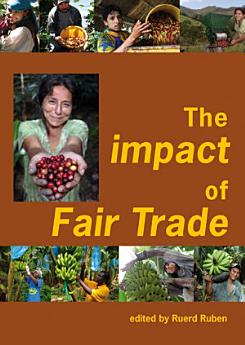
Twenty years ago, Fair Trade started as an effort to enable smallholder producers from developing countries to successfully compete in international markets. Better access to market outlets and stable prices are considered key principles for sustainable poverty reduction and stakeholder participation based on 'trade, not aid'. While Fair Trade is primarily conceived as a trading partnership - based on dialogue, transparency and mutual respect - seeking greater equity in international trade, it relies on an organized social movement promoting standards for production practices and delivery procedures, working conditions and labour remuneration, environmental care and social policies in supply chains of certified tropical goods. Over the past two decades, sales of Fair Trade products have considerably increased. After the first shipments of coffee, the range of products has gradually broadened to include fruit (particularly bananas, pineapple and citrus), tea, cocoa, textiles, cosmetics and a whole series of other products. Global Fair Trade sales have steadily grown to approximately EUR 1.6 billion worldwide, covering almost 600 producer organizations in more than 55 developing countries that represent close to a million families of farmers and workers. In recent years, efforts have been made towards mainstreaming of Fair Trade involving large international companies and retail chains. While numerous case studies and descriptive overviews are available to illustrate the importance of Fair Trade for producers and their families in developing countries, little quantitative evidence has been presented to review the socio-economic impact of Fair Trade. This collection of articles provides the first balanced in-depth analysis of the real welfare impact of Fair Trade, paying attention to key dimensions of income, consumption, wealth, environment, empowerment and gender. The core articles are based on extensive field surveys in Peru, Costa Rica, Ecuador, Ghana, Kenya and Mexico, and provide valuable insights in the contributions and constraints for producers’ involvement in Fair Trade. In addition, attention is paid to the broader implications for international trade regimes and the ethical perspectives on Fair Trade.
Twenty years ago, Fair Trade started as an effort to enable smallholder producers from developing countries to successfully compete in international markets. Better access to market outlets and stable prices are considered key principles for sustainable poverty reduction and stakeholder participa...
Discover more
Rate this ebook
Tell us what you think.
Reading information
Smartphones and tablets
Install the Google Play Books app for Android and iPad/iPhone. It syncs automatically with your account and allows you to read online or offline wherever you are.
Laptops and computers
You can listen to audiobooks purchased on Google Play using your computer's web browser.
eReaders and other devices
To read on e-ink devices like Kobo eReaders, you'll need to download a file and transfer it to your device. Follow the detailed Help Center instructions to transfer the files to supported eReaders.