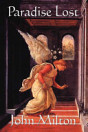
Paradise Lost
Oct 2026 · Editorial Santidad
Ebook
286
Pages
family_home
Eligible
info
About this ebook
*What if the real Hell wasn't falling... but discovering you were never truly free?* Some sins condemn. Some desires destroy. And some secrets can turn paradise into the most dangerous place in the world. In **Paradise Lost**, the line between good and evil is far thinner than it seems, and no one is as innocent as they pretend to be. What begins as a promise of something extraordinary becomes a dark journey into temptation, power, and the consequences of defying everything you were taught never to question. Because sometimes, the fall doesn't begin when you disobey... but when you discover that the rules were never meant to protect you. They were meant to keep you prisoner. With its haunting atmosphere and thought-provoking exploration of freedom, ambition, and human nature, *Paradise Lost* confronts us with a question that has echoed through the centuries: **How much would you sacrifice for the right to choose your own destiny?** Perhaps paradise was never as perfect as it seemed. Perhaps the villain was never truly evil. And perhaps losing everything is the price you must pay to finally open your eyes. **Enter paradise. Embrace temptation. And dare to question who truly deserves to be condemned.**
*What if the real Hell wasn't falling... but discovering you were never truly free?* Some sins condemn. Some desires destroy. And some secrets can turn paradise into the most dangerous place in the world. In **Paradise Lost**, the line between good and evil is far thinner than it seems, and no on...
Discover more
About the author
John Milton was born in London in 1608, the son of a prosperous composer. A brilliant scholar from a young age, he studied at Cambridge and devoted himself to mastering languages — Latin, Greek, Hebrew, Italian, French, and Spanish — until he could read the world's great works in their original tongues. He was a poet, a political thinker, and a fierce defender of freedom. When England was torn apart by civil war, Milton threw himself into the cause, writing powerful pamphlets in defense of liberty, free speech, and the right to divorce. He served as a government official under Oliver Cromwell, risking everything for his beliefs — and paying the price when the monarchy was restored. By 1652, the man who had spent his life in words had gone completely blind. But he did not stop. Dictating to his daughters and friends, he composed his masterpiece from memory and imagination alone — an epic so vast it would change literature forever. Paradise Lost was published in 1667. It was not a quiet success; it was a revolution. Milton took the oldest story ever told — the fall of man — and gave it a rebel so compelling that readers have never stopped arguing about him since. He died in 1674, poor and largely uncelebrated in his final years. But he left behind a poem that would outlive empires.
John Milton was born in London in 1608, the son of a prosperous composer. A brilliant scholar from a young age, he studied at Cambridge and devoted himself to mastering languages — Latin, Greek, Hebrew, Italian, French, and Spanish — until he could read the world's great works in their original t...
Rate this ebook
Tell us what you think.
Reading information
Smartphones and tablets
Install the Google Play Books app for Android and iPad/iPhone. It syncs automatically with your account and allows you to read online or offline wherever you are.
Laptops and computers
You can listen to audiobooks purchased on Google Play using your computer's web browser.
eReaders and other devices
To read on e-ink devices like Kobo eReaders, you'll need to download a file and transfer it to your device. Follow the detailed Help Center instructions to transfer the files to supported eReaders.