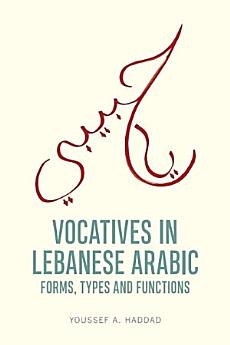
Vocatives in Lebanese Arabic: Forms, Types and Functions
Apr 2026 · Edinburgh University Press
Ebook
288
Pages
family_home
Eligible
info
About this ebook
Analysing data from a variety of sources including movies, plays and talk shows, this book provides a detailed description of the forms and types of vocatives in Lebanese Arabic and offers an in-depth exploration of their social functions and pragmatic significance. It underscores the significance of the use of attested data to the structural analyses of vocatives, as well as other linguistic elements and shows that a data-driven approach to structural analysis provides a more complete picture.
The book examines vocatives not just as markers of address but as tools for negotiating relationships and managing interpersonal dynamics. Part I categorizes vocatives by their linguistic forms—ranging from pronouns to complex phrases—and delineates their types, such as honorifics, kinship terms, and terms of abuse. Part II delves into the interpersonal pragmatics of vocatives, analysing how they shape social interactions, reinforce or challenge identities, and influence relational outcomes.
This approach to vocatives in Lebanese Arabic provides fascinating insight into how language reflects cultural norms and social hierarchies, contributing to the fields of Arabic linguistics, pragmatics, and sociolinguistics.
Analysing data from a variety of sources including movies, plays and talk shows, this book provides a detailed description of the forms and types of vocatives in Lebanese Arabic and offers an in-depth exploration of their social functions and pragmatic significance. It underscores the significanc...
About the author
Youssef A. Haddad is Professor of Arabic Language and Linguistics at Georgetown University in Qatar. His research focuses on syntax, pragmatics, and their interface. He has published extensively on Arabic linguistics, as well as the linguistics of other languages. His publications include the books The Sociopragmatics of Attitude Datives in Levantine Arabic (Edinburgh University Press, 2018) and Control into Conjunctive Participle Clauses: The Case of Assamese (Mouton de Gruyter, 2011). He has also co-edited two volumes of Perspectives on Arabic Linguistics (John Benjamins, 2016, 2019) and authored the textbook Introduction to Arabic Linguistics (Wiley Blackwell, 2023).
Youssef A. Haddad is Professor of Arabic Language and Linguistics at Georgetown University in Qatar. His research focuses on syntax, pragmatics, and their interface. He has published extensively on Arabic linguistics, as well as the linguistics of other languages. His publications include the boo...
Rate this ebook
Tell us what you think.
Reading information
Smartphones and tablets
Install the Google Play Books app for Android and iPad/iPhone. It syncs automatically with your account and allows you to read online or offline wherever you are.
Laptops and computers
You can listen to audiobooks purchased on Google Play using your computer's web browser.
eReaders and other devices
To read on e-ink devices like Kobo eReaders, you'll need to download a file and transfer it to your device. Follow the detailed Help Center instructions to transfer the files to supported eReaders.