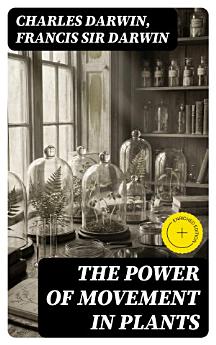
The Power of Movement in Plants: Enriched edition. Exploring Plant Movement: Evolutionary Insights Through 19th-Century Botanical Observation
Sep 2022 · DigiCat
Ebook
495
Pages
family_home
Eligible
info
About this ebook
The Power of Movement in Plants is an extraordinary scientific compendium that unveils the intricate dance of plant movement through meticulous observation and analysis. This anthology of papers explores the range of plant behavior, shedding light on the hidden capabilities of these living organisms. With its diverse literary styles, the collection shifts from empirical observations to theoretical musings, highlighting the significant evolutionary implications. The diversity within the works offered positions this anthology as a monumental narrative that tracks the intricate symphony of motion that defines plant life. The collection also presents some standout pieces, analyzing growth patterns and environmental responses that challenge our perception of plant passivity. The anthology features contributions from the eminent Charles Darwin and Francis Sir Darwin, whose relentless curiosity and pioneering research collectively advance the understanding of plant biology. This collaboration aligns with the broader Naturalism movement of the 19th century, providing profound insights into the adaptive and evolutionary mechanisms of plants. Both authors bring a wealth of knowledge, utilizing their observations to challenge existing paradigms and enrich the scientific discourse, thus offering readers a comprehensive perspective through their innovative studies. For readers desiring a scholarly yet accessible exploration of botanical sciences, The Power of Movement in Plants offers an unparalleled journey. This anthology provides a unique convergence of historical, scientific, and literary scholarship, inviting readers to recognize and appreciate the nuanced choreography of plant movement. Engage with this compilation to expand your understanding of plant sensory and response mechanisms and to appreciate the sophisticated dialogue that emerges when multiple expert voices converge on a single theme. This volume serves as both a scientific resource and a literary exploration, making it an essential read for the curious and informed alike. In this enriched edition, we have carefully created added value for your reading experience: - A succinct Introduction situates the work's timeless appeal and themes. - The Synopsis outlines the central plot, highlighting key developments without spoiling critical twists. - A detailed Historical Context immerses you in the era's events and influences that shaped the writing. - A thorough Analysis dissects symbols, motifs, and character arcs to unearth underlying meanings. - Reflection questions prompt you to engage personally with the work's messages, connecting them to modern life. - Hand‐picked Memorable Quotes shine a spotlight on moments of literary brilliance. - Interactive footnotes clarify unusual references, historical allusions, and archaic phrases for an effortless, more informed read.
The Power of Movement in Plants is an extraordinary scientific compendium that unveils the intricate dance of plant movement through meticulous observation and analysis. This anthology of papers explores the range of plant behavior, shedding light on the hidden capabilities of these living organi...
Discover more
About the author
Charles Darwin, a pivotal figure in the natural sciences, was born on February 12, 1809, in Shrewsbury, England. Notably recognized for his foundational role in evolutionary biology, Darwin's contributions extend well into the study of botany. His work, 'The Power of Movement in Plants', published in 1880, elucidates the mechanisms through which plants maneuver their stems and roots in response to environmental stimuli, a phenomenon he termed 'circumnutation.' This investigation buttresses his broader inquiries into natural selection, providing insight into the adaptive movements of plants for survival. The volume showcases Darwin's meticulous empirical approach, characteristic of his broader literary corpus, which includes seminal works like 'On the Origin of Species' and 'The Descent of Man'. In 'The Power of Movement in Plants', Darwin collaborated with his son, Francis, reflecting both his scientific rigor and his familial collaborative spirit. Darwin's literary style is analytical yet engaging, weaving detailed observation with sweeping naturalistic philosophy. His writing not only extended the knowledge of the biological sciences but also transformed the contemporary understanding of life on Earth. His death on April 19, 1882, marked the loss of a visionary whose thoughts continue to resonate within and beyond the scientific community.
Charles Darwin, a pivotal figure in the natural sciences, was born on February 12, 1809, in Shrewsbury, England. Notably recognized for his foundational role in evolutionary biology, Darwin's contributions extend well into the study of botany. His work, 'The Power of Movement in Plants', publishe...
Rate this ebook
Tell us what you think.
Reading information
Smartphones and tablets
Install the Google Play Books app for Android and iPad/iPhone. It syncs automatically with your account and allows you to read online or offline wherever you are.
Laptops and computers
You can listen to audiobooks purchased on Google Play using your computer's web browser.
eReaders and other devices
To read on e-ink devices like Kobo eReaders, you'll need to download a file and transfer it to your device. Follow the detailed Help Center instructions to transfer the files to supported eReaders.