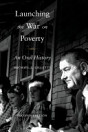
Launching the War on Poverty: An Oral History, Edition 2
Jul 2010 · Oxford University Press
star
1 review
Ebook
480
Pages
Tools
info
family_home
Eligible
info
About this ebook
Head Start, Job Corps, Foster Grandparents, College Work-Study, VISTA, Community Action, and the Legal Services Corporation are familiar programs, but their tumultuous beginning has been largely forgotten. Conceived amid the daring idealism of the 1960s, these programs originated as weapons in Lyndon Johnson's War on Poverty, an offensive spearheaded by a controversial new government agency. Within months, the Office of Economic Opportunity created an array of unconventional initiatives that empowered the poor, challenged the established order, and ultimately transformed the nation's attitudes toward poverty. In Launching the War on Poverty, historian Michael L. Gillette weaves together oral history interviews with the architects of the Great Society's boldest experiment. Forty-nine former poverty warriors, including Sargent Shriver, Adam Yarmolinsky, and Lawrence F. O'Brien, recount this inside story of unprecedented governmental innovation. The interviews capture the excitement and heady optimism of Americans in the 1960s along with their conflicts and disillusionment. This new edition of Launching the War on Poverty adds the voice of Lyndon Johnson to the story with excerpts from his recently-released White House telephone conversations. In these colorful and brutally candid conversations, LBJ exercises his full arsenal of presidential powers, political leverage, and legendary persuasiveness to win one of his most difficult legislative battles. The second edition also documents how the OEO's offspring survived their volatile origins to become broadly supported features of domestic policy.
Head Start, Job Corps, Foster Grandparents, College Work-Study, VISTA, Community Action, and the Legal Services Corporation are familiar programs, but their tumultuous beginning has been largely forgotten. Conceived amid the daring idealism of the 1960s, these programs originated as weapons in Ly...
Discover more
Ratings and reviews
1 review

A Google user
- Flag inappropriate
July 14, 2011
This report is somewhat valuable in that there are some good oral intereviews with some of the administrators once the program was established. Its title perports to cover the Launch of the program and he does NOT intervew any of the original planners or administrators at the launch or shortly thereafter. Many of his "facts" are simply WRONG on simple things that were easily checkable. FOr example, he states that Franklin Johnson replaced Otis Singletary as the Presidential appointee as Job Corps director. In reality it was the other way around. And neither of them was interviewed as it was they who were in office before the launch (Johnson) and during and after the launch (Singletary). Nor were any of the other key staff who were around then interviewed. His main source, the 3rd director, was not even around for the planning and was not involved with the launch or the aftermath.
Another weakness is that when he gives "reasons" for different actions, there is no documentation as to where the reasons come from. Of the greatest speculation in politics are the reasons that politicans have for doing what they do. Unless they are intereviewed of intimates and assistantants are, the reasons are rank specualtion. In that case reasonable scholarship requires providing the several "pundit" theories of the reasons that exist; the author here only provides one and gives no source as to where those came from. Others who have first hand knowledge of the launch of the War on Poverty provide very different reasons than this work does and their sources are identified.
Basic research on issues have been completely overlooked by the author. For example, he realates a conversation between President Johnson and assistant Bill Moyers on the cost of the Job Corps. The President then thought the cost high and did not understand the reasons. Moyers knew only a little bit more at the time. The author's conclusion states that therefore the costs were high. What he did not do is then include from the public record the adminoistrations's later budgetary submission where Johnson specifically asked Congress for the "high" amount. Nor did he include any of the Congressional Testimony over the costs of the Job Corps where a large part of the cost was explained as the result of captol expenditures where government does not amoritze and writes all construction expenses off in the first year. There were otehr reasons all in the record and Congress overwhelmingly then funded the program with its "high cost." Lyndon was not the shy, retiring type who would ask Congress for money unless he personally thought it was justified. The author just provides his initial impressions and concerns.
Finally, the author gives his assessment of the Job corps and does not mention the various formal evaluations that have been done including the ones that showed that for ever dollar the tapayer invested in Job Corps, $3 were returned to the treasury. This is why that what Gillette descripes as a program frought with problems and too expensive was, along with Headstart, the only two Poverty Programs that were still in place and annually funded even into the 21st century.
There are similar problems and virtues with the interviews of the other Poverty Programs. But the very limited perspective of the few people he interviewed and his failure to check and add from the pubkic record makes this book of limitied value--namely the value of recording the points of view of the few interviewees that he included. As a major resource or as a very reliable one, it fails.
About the author
Michael L. Gillette directed the LBJ Library's Oral History Program from 1976 to 1991. He subsequently served as director of the Center for Legislative Archives at the National Archives for twelve years and is currently executive director of Humanities Texas, the state humanities council.
Michael L. Gillette directed the LBJ Library's Oral History Program from 1976 to 1991. He subsequently served as director of the Center for Legislative Archives at the National Archives for twelve years and is currently executive director of Humanities Texas, the state humanities council.
Rate this ebook
Tell us what you think.
Reading information
Smartphones and tablets
Install the Google Play Books app for Android and iPad/iPhone. It syncs automatically with your account and allows you to read online or offline wherever you are.
Laptops and computers
You can listen to audiobooks purchased on Google Play using your computer's web browser.
eReaders and other devices
To read on e-ink devices like Kobo eReaders, you'll need to download a file and transfer it to your device. Follow the detailed Help Center instructions to transfer the files to supported eReaders.