About this ebook
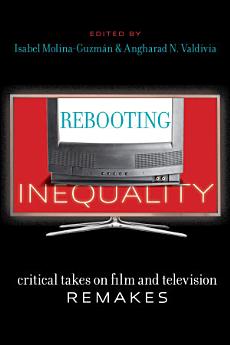
Explores how nostalgia-driven reboots, revivals, and remakes perpetuate systemic biases around race, gender, and sexuality amid global nationalism
From Ghostbusters to Will & Grace, One Day at a Time to Jurassic Park, the past decade has seen Hollywood reach a new peak in its obsession with reboots, remakes, and revivals. Spearheaded by media giants like Disney and Netflix, these projects promise progress—more diverse casts, “timely” social commentary, and redemptive nostalgia—yet they often reproduce the very inequalities they claim to address.
Rebooting Inequality brings together twelve concise, theoretically rich essays that interrogate how Hollywood’s recycling of intellectual property sustains entrenched systems of racial, gender, and sexual inequality. Across genres and platforms, contributors explore how the industry’s nostalgic return to familiar stories masks an ongoing reliance on white, patriarchal, and heteronormative frameworks of storytelling and production.
Blending critical race, feminist, and media studies, the collection analyzes dozens of recent film and television revivals, remakes, and reboots from Roseanne to Charlie’s Angels to ask what it means when entertainment markets strive for diversity while leaving the structures of inequality intact.
Accessible yet deeply analytical, Rebooting Inequality exposes how nostalgia has become both a marketing strategy and a political tool, revealing how the “new” Hollywood continues to reanimate the past—profitably, repeatedly, and unequally.
Explores how nostalgia-driven reboots, revivals, and remakes perpetuate systemic biases around race, gender, and sexuality amid global nationalism
From Ghostbusters to Will & Grace, One Day at a Time to Jurassic Park, the past decade has seen Hollywood reach a new peak in its obsession with rebo...
Discover more
About the author
Isabel Molina-Guzman (Editor)
Isabel Molina-Guzmán is Professor of Communications and Latina/o Studies at the University of Illinois, Urbana-Champaign. She serves as co-editor of the journal Feminist Media Studies, and is the author of more than two dozen academic articles and two books, including Latinas/Latinos on Television (2018) and Dangerous Curves: Latina Bodies in the Media (2010). Her research expertise on Latinas/Latinos, gender, race, ethnicity and communication has been featured at the 2016 White House Conference on Women and Girls of Color, New York Times, and National Public Radio among other outlets.
Angharad N. Valdivia (Editor)
Angharad N. Valdivia is Research Professor of Communications and Media at the Institute of Communications Research. She has written many books on Latina/o Media Studies, the latest of which is The Gender of Latinidad: Uses and Abuses of Hybridity (2020). The seven volume Encyclopedia of International Media Studies and A Companion to Media Studies illustrate Valdivia’s engagement and mapping of the field of Media Studies. Valdivia was recently named a Fellow of the International Communication Association and a Distinguished Scholar by the Critical Cultural Studies Division of the National Communication Association. She is also a recipient of the Teresa Award for Feminist Studies in ICA.
Isabel Molina-Guzman (Editor)
Isabel Molina-Guzmán is Professor of Communications and Latina/o Studies at the University of Illinois, Urbana-Champaign. She serves as co-editor of the journal Feminist Media Studies, and is the author of more than two dozen academic articles and two books, includi...
Rate this ebook
Tell us what you think.
Reading information
Smartphones and tablets
Install the Google Play Books app for Android and iPad/iPhone. It syncs automatically with your account and allows you to read online or offline wherever you are.
Laptops and computers
You can listen to audiobooks purchased on Google Play using your computer's web browser.
eReaders and other devices
To read on e-ink devices like Kobo eReaders, you'll need to download a file and transfer it to your device. Follow the detailed Help Center instructions to transfer the files to supported eReaders.