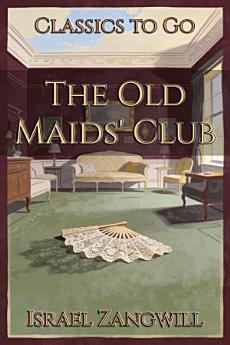
The Old Maids' Club: Restored Classics to Go Edition
About this ebook
Discover more
About the author
Israel Zangwill was a British Jewish writer, journalist, dramatist, and social thinker whose life was shaped by the vibrant, often precarious world of immigrant London in the late nineteenth and early twentieth centuries. Born in 1864 to a family of Eastern European Jewish immigrants, he was educated in the capital and went on to become one of the most distinctive voices of his generation, moving with ease between fiction, plays, essays, and political commentary. He first gained notice for his sharp wit and social observation, and his work soon established him as a keen chronicler of urban life, identity, and the tensions between tradition and modernity. Zangwill's writing often explored assimilation, prejudice, class, gender roles, and the search for belonging, and he approached these subjects with a blend of humor, empathy, and moral seriousness. That combination made him an important figure in debates about Jewish life, nationalism, and cosmopolitanism, while also giving his fiction a lively accessibility that still speaks to modern readers. His legacy endures in the way he captures the pressures of social change and the complexity of identities shaped by migration, community, and exclusion. Readers who enjoy socially observant fiction, witty satire, and thoughtful writing about identity and society will find Zangwill especially rewarding today.