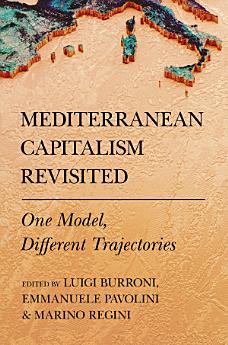
Mediterranean Capitalism Revisited: One Model, Different Trajectories

· ·
· Cornell University Press
Ebook
294
Pages

About this ebook

Mediterranean Capitalism Revisited brings together leading experts on the political economies of southern Europe—specifically Greece, Italy, Spain, and Portugal—to closely analyze and explain the primary socioeconomic and institutional features that define "Mediterranean capitalism" within the wider European context. These economies share a number of features, most notably their difficulties to provide viable answers to the challenge of globalization.

By examining and comparing such components as welfare, education and innovation policies, cultural dimensions, and labor market regulation, Mediterranean Capitalism Revisited attends to both commonalities and divergences between the four countries, identifying the main reasons behind the poor performance of their economies and slow recovery from the Great Recession of 2007–2008. This volume also sheds light on the process of diversification among the four countries and addresses whether it did and still does make sense to speak of a uniquely Mediterranean model of capitalism.

Contributors: Alexandre Afonso, Leiden University; Lucio Baccaro, Max Planck Institute for the Study of Societies; Rui Branco, NOVA University of Lisbon; Fabio Bulfone, Max Planck Institute for the Study of Societies; Giliberto Capano, University of Bologna; Sabrina Colombo, University of Milan; Lisa Dorigatti, University of Milan; Ana M. Guillén, University of Oviedo; Matteo Jessoula, University of Milan; Andrea Lippi, University of Florence; Manos Matsaganis, Polytechnic University of Milan; Oscar Molina, Autonomous University of Barcelona; Manuela Moschella, Scuola Normale Superiore; Sofia A. Pérez, Boston University; Gemma Scalise, University of Bergamo; Arianna Tassinari, Max Planck Institute for the Study of Societies.

Mediterranean Capitalism Revisited brings together leading experts on the political economies of southern Europe—specifically Greece, Italy, Spain, and Portugal—to closely analyze and explain the primary socioeconomic and institutional features that define "Mediterranean capitalism" within the wi...

About the author

Luigi Burroni is Professor of Economic Sociology at the University of Florence. He is the coeditor of Economy and Society in Europe, among other books.

Emmanuele Pavolini is Professor of Economic Sociology at the University of Macerata. He is coeditor of The Italian Welfare State in European Perspective.

Marino Regini is Professor Emeritus of Economic Sociology at the University of Milan. Among his recent books is Changing Governance in Universities.
Luigi Burroni is Professor of Economic Sociology at the University of Florence. He is the coeditor of Economy and Society in Europe, among other books. Emmanuele Pavolini is Professor of Economic Sociology at the University of Macerata. He is coeditor of The Italian Welfare State in European Per...

Rate this ebook

Tell us what you think.

Reading information

Smartphones and tablets
Install the Google Play Books app for Android and iPad/iPhone. It syncs automatically with your account and allows you to read online or offline wherever you are.
Laptops and computers
You can listen to audiobooks purchased on Google Play using your computer's web browser.
eReaders and other devices
To read on e-ink devices like Kobo eReaders, you'll need to download a file and transfer it to your device. Follow the detailed Help Center instructions to transfer the files to supported eReaders.

More by Luigi Burroni

Similar ebooks

Restructuring Welfare Governance: Marketization, Managerialism and Welfare State ProfessionalismQuasi-markets and managerial steering techniques have spread in the provision of welfare state services and are now a salient feature. This innovative book explores the introduction and impact of marketization and managerialism in social policy by adopting a dual perspective – one on regulation and governance, the other on human resources – covering five fields of social service delivery. Welfare governance (for example welfare mix, regulation, employment conditions and customer involvement) has changed significantly in the past decade. In particular, the new governance models not only clash with traditional ideas of bureaucratic regulation but also with the norms and standards of professional service delivery. The fact that the labor force in welfare organizations is made up of ‘professionals’ implies that the introduction of new modes of welfare governance often results in organizational conflicts. The editors and contributors collectively assesses these processes not only by comparing different policy fields and countries, but also by taking a close look inside organizations, examining the coping strategies of professionals, and how they adapt to new models of governing welfare organizations. An ideal compliment to undergraduate and postgraduate study, Restructuring Welfare Governance is essential reading for scholars in the fields of social policy, public administration and comparative welfare state analysis.
Tanja Klenk
Politics & current events
5.0
$40.00$31.20