About this ebook
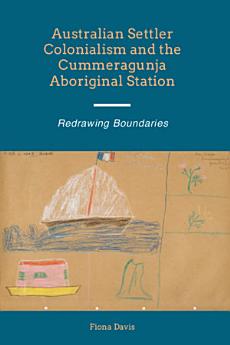
In 1938, the anthropologist Norman Tindale gave a classroom of young Aboriginal children a set of crayons and asked them to draw. The children, residents of the government-run Aboriginal station Cummeragunja, mostly drew pictures of aspects of white civilization boats, houses and flowers. What now to make of their artwork? Were the children encouraged or pressured to draw non-Aboriginal scenes, or did they draw freely, appropriating the white culture they now lived within? Did their Aboriginality change the meaning of their art, as they sketched out this ubiquitous colonial imagery? Australian Settler Colonialism and the Cummeragunja Aboriginal Station traces Cummeragunja's history from its establishment in the 1880s to its mass walk-off in 1939 and finally, to the 1960s, when its residents regained greater control over the land. Taking in oral history traditions, the author reveals the competing interests of settler governments, scientific and religious organizations, and nearby settler communities. The nature of these interests has broad and important implications for understanding settler colonial history. This history shows white people set boundaries on Aboriginal behaviour and movement, through direct legislation and the provision of opportunities and acceptance. But Aboriginal people had agency within and, at times, beyond these limits. Aboriginal people appropriated aspects of white culture including the houses, the flowers and the boats that their children drew for Tindale - reshaping them into new tools for Aboriginal society, tools with which to build lives and futures in a changed environment.
In 1938, the anthropologist Norman Tindale gave a classroom of young Aboriginal children a set of crayons and asked them to draw. The children, residents of the government-run Aboriginal station Cummeragunja, mostly drew pictures of aspects of white civilization boats, houses and flowers. What no...
Discover more
About the author
Fiona Davis is a scholar in cross-cultural history with a PhD from the University of Melbourne. She is the co-editor of Founders, Firsts and Feminists: Women Leaders in Twentieth Century Australia and the author of book chapters in Creating White Australia and Outside Country: A History of Inland Australia. The descendant of early settlers, she grew up on a dairy farm in northern Victoria.
Fiona Davis is a scholar in cross-cultural history with a PhD from the University of Melbourne. She is the co-editor of Founders, Firsts and Feminists: Women Leaders in Twentieth Century Australia and the author of book chapters in Creating White Australia and Outside Country: A History of Inland...
Rate this ebook
Tell us what you think.
Reading information
Smartphones and tablets
Install the Google Play Books app for Android and iPad/iPhone. It syncs automatically with your account and allows you to read online or offline wherever you are.
Laptops and computers
You can listen to audiobooks purchased on Google Play using your computer's web browser.
eReaders and other devices
To read on e-ink devices like Kobo eReaders, you'll need to download a file and transfer it to your device. Follow the detailed Help Center instructions to transfer the files to supported eReaders.