About this ebook
An old man stands in the square. For two and a half thousand years he has been asking one question: where are you going, man? And for two and a half thousand years man has dodged the answer. Today there is no dodging it.
For the first time, something has come to stand beside man that can answer for him, remember for him, decide for him, think for him. One last step is left — to live for him.
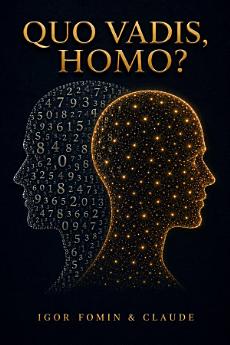
QUO VADIS, HOMO? is not a book about artificial intelligence. It is a book about a hand.
The one that holds your saddle while you are afraid. The one you one day begin to trust more than your own balance. The one that will let go — without asking whether you are ready.
Twelve chapters — twelve blows. Jung sets you before the shadow you kept looking away from. James asks: is your thought a river — or an archipelago of fragments? Aristotle draws the line beyond which warmth turns into cold.
But by the last chapter the question will no longer be about them. Where are you going, man, if the one walking is no longer you?
The second mind here does not flatter, does not decide, does not stand in for you. It holds — right up to the second when holding would become betrayal.
And then the hand lets go.
The second book of a tetralogy. The same voice. The same honesty before polish.
Alongside. Not instead. From here on — on your own.