The Ambivalence of Creation: Debates Concerning Innovation and Artifice in Early China

· Stanford University Press
Ebook
312
Pages
Tools
Eligible

About this ebook

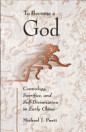
As early as the Warring States period in China (fourth through third centuries B.C.), debates arose concerning how and under what circumstances new institutions could be formed and legitimated. But the debates quickly encompassed more than just legitimation. Larger issues came to the fore: Can a sage innovate? If so, under what conditions? Where did human culture originally come from? Was it created by human sages? Is it therefore an artificial fabrication, or was it based in part on natural patterns? Is it possible for new sages to emerge who could create something better?

This book studies these debates from the Warring States period to the early Han (second century b.c.), analyzing the texts in detail and tracing the historical consequences of the various positions that emerged. It also examines the time's conflicting narratives about the origin of the state and how these narratives and ideas were manipulated for ideological purposes during the formation of the first empires.

While tracing debates over the question of innovation in early China, the author engages such questions as the prevailing notions concerning artifice and creation. This is of special importance because early China is often described as a civilization that assumed continuity between nature and culture, and hence had no notion of culture as a fabrication, no notion that the sages did anything other than imitate the natural world. The author concludes that such views were not assumptions at all. The ideas that human culture is merely part of the natural world, and that true sages never created anything but instead replicated natural patterns arose at a certain moment, then came to prominence only at the end of a lengthy debate.
As early as the Warring States period in China (fourth through third centuries B.C.), debates arose concerning how and under what circumstances new institutions could be formed and legitimated. But the debates quickly encompassed more than just legitimation. Larger issues came to the fore: Can a ...

Discover more

About the author

Michael J. Puett is John L. Loeb Associate Professor of Humanities at Harvard University.

Rate this ebook

Tell us what you think.

Reading information

Smartphones and tablets
Install the Google Play Books app for Android and iPad/iPhone. It syncs automatically with your account and allows you to read online or offline wherever you are.
Laptops and computers
You can listen to audiobooks purchased on Google Play using your computer's web browser.
eReaders and other devices
To read on e-ink devices like Kobo eReaders, you'll need to download a file and transfer it to your device. Follow the detailed Help Center instructions to transfer the files to supported eReaders.