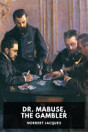
Dr. Mabuse, master of mystery: A novel
Norbert Jacques
Jun 2026 · Good Press
Ebook
197
Pages
family_home
Eligible
info
About this ebook
Norbert Jacques's Dr. Mabuse, Master of Mystery is a seminal Weimar-era crime novel in which the brilliant and protean Mabuse—psychologist, gambler, hypnotist, criminal strategist—moves through Berlin's modern nightlife, stock exchanges, and underworld with terrifying ease. Blending detective fiction, social satire, and psychological thriller, the novel captures the instability of post-World War I Germany, where speculation, disguise, and moral disorientation shape public life. Jacques writes with journalistic vividness and narrative velocity, yet the book also belongs to the tradition of the great European criminal mastermind tale, elevating popular genre fiction into a diagnosis of modern mass society. Jacques, a Luxembourg-born writer who worked extensively in German literary culture, was especially attuned to cosmopolitan modernity and the sensational energies of the interwar period. His experience as a journalist and novelist informed his sharp observation of urban life, while the upheavals of the 1920s gave him abundant material for imagining figures of manipulation and power. Dr. Mabuse emerged from this milieu as both an entertainment and a cultural symptom, later achieving even greater fame through Fritz Lang's film adaptation. This is highly recommended for readers interested in Weimar culture, early twentieth-century popular fiction, and the origins of the modern supervillain. It is an engrossing, historically resonant novel whose portrait of charisma, fraud, and social anxiety remains strikingly contemporary.
Norbert Jacques's Dr. Mabuse, Master of Mystery is a seminal Weimar-era crime novel in which the brilliant and protean Mabuse—psychologist, gambler, hypnotist, criminal strategist—moves through Berlin's modern nightlife, stock exchanges, and underworld with terrifying ease. Blending detective fic...
Discover more
Rate this ebook
Tell us what you think.
Reading information
Smartphones and tablets
Install the Google Play Books app for Android and iPad/iPhone. It syncs automatically with your account and allows you to read online or offline wherever you are.
Laptops and computers
You can listen to audiobooks purchased on Google Play using your computer's web browser.
eReaders and other devices
To read on e-ink devices like Kobo eReaders, you'll need to download a file and transfer it to your device. Follow the detailed Help Center instructions to transfer the files to supported eReaders.