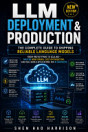
Generative AI Principles: Creating Content with Machines: The Essential Guide to Text, Images, and Code Generation for Beginners and Creatives
About this ebook
The book begins by explaining what generative AI is and how it differs from traditional AI systems. It traces the historical development of the technology, from early computer-generated art experiments of the 1960s to today's sophisticated neural network models. Readers will learn about breakthrough technologies like transformer models and how massive datasets enable AI to understand and generate human-like content across multiple media types, including text, visual art, and functional codes.
Getting started with AI tools is made simple, covering web interfaces, free and paid tiers, and the basic settings that control creativity and output quality. The book provides detailed guidance on writing effective prompts for text generation, showing how specificity, context, and structure dramatically improve results. It covers editing AI-generated content, overcoming common challenges like hallucination and inconsistency, and maintaining original voice when working with AI assistance.
Visual content creation receives extensive coverage, from crafting detailed image descriptions to understanding style parameters and technical settings like aspect ratio and guidance scale. Readers learn how to iterate on results, use negative prompts to avoid common pitfalls, and combine AI-generated elements with traditional artistic techniques. Special attention is given to ethical considerations around copyright, attribution, and responsible use in commercial contexts.
For developers and technical users, the book explores AI-assisted code generation, debugging, and automation. It covers how coding assistants work, best practices for integrating them into development workflows, and security considerations for AI-generated code. The guide emphasizes practical techniques for generating boilerplate code, writing documentation, and solving programming challenges faster while maintaining quality standards.
Advanced prompt engineering techniques are explained in detail, including few-shot learning, chain-of-thought prompting, and negative prompting. The book shows how to create reusable templates, adjust temperature and top-p settings for different creative outcomes, and develop systematic approaches to improving AI outputs through iterative refinement. These skills enable users to achieve consistent, professional-quality results across diverse projects.
Key Topics Covered:
· What is Generative AI: Understanding the technology and its historical development.
· Getting Started with AI Tools: Access, setup, free vs paid tiers, and interface navigation.
· Writing with AI: Prompt crafting, tone control, editing strategies, and overcoming writer's block.
· Creating AI Art & Images: Detailed prompts, style parameters, iteration techniques, and ethical considerations.
· AI for Code Generation: Coding assistance, debugging, automation, and security practices.
· Advanced Prompt Engineering: Structured prompting, few-shot learning, chain-of-thought, and negative prompts.
· Workflows for Creatives & Professionals: Integration into graphic design, marketing, writing, software development, and education.
· Combining AI with Human Creativity: Balance, originality, editing, and maintaining creative voice.
· Troubleshooting & Improving AI Outputs: Diagnosing issues, fixing inaccuracies, reducing repetition, and improving quality.
· The Future of Generative AI: Emerging trends, customization, integration, ethical frameworks, and long-term implications.
Discover more
About the author
Shen Hao Harrison is a tech enthusiast, futurist, and storyteller who breaks down complex technological concepts into clear, practical lessons. For over a decade, he has helped individuals and organizations understand the digital forces shaping our world. His writing blends analytical clarity with creative foresight, making technology accessible to everyone. He speaks at international tech events and contributes to leading technology publications. When not writing, he explores the frontiers of AI, practices martial arts (Wushu), and considers the philosophical implications of human-machine interaction.