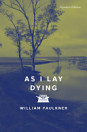
As I Lay Dying
About this ebook
The only thing Addie Bundren wants is to be buried in her hometown of Jefferson in Yoknapatawpha County, a final request she makes to her husband and five children. But as the family travels across rural Mississippi to lay their matriarch to rest, each of the Bundrens finds themself caught between their personal agendas and their common purpose. At once darkly comic and deeply human, As I Lay Dying has been ranked time and again as one of the greatest novels of the twentieth century.
"The greatest artist the South has produced." —Ralph Ellison
"No man ever put more of his heart and soul into the written word than did William Faulkner. If you want to know all you can about that heart and soul, the fiction where he put it is still right there." —Eudora Welty
Discover more
About the author
William Faulkner was an American writer and Nobel Prize laureate from Oxford, Mississippi. He is primarily known for his novels and short stories set in the fictional Yoknapatawpha County, based on Lafayette County, Mississippi, where he spent most of his life. Faulkner is one of the most celebrated writers in American Southern literature, and his 1949 Nobel Prize in Literature made him the only Mississippi-born Nobel laureate. Two of his works, A Fable (1954) and The Reivers (1962), won the Pulitzer Prize for Fiction. In 1998, the Modern Library ranked his 1929 novel The Sound and the Fury sixth on its list of the one hundred best English-language novels of the twentieth century. Also on the list were Faulkner's As I Lay Dying (1930) and Light in August (1932).