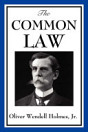
The Common Law
Feb 2013 · Courier Corporation
Ebook
480
Pages
Tools
info
About this ebook
Oliver Wendell Holmes, Jr. (1841–1935) is generally considered one of the two greatest justices of the United States Supreme Court, Chief Justice John Marshall being the other. In more than 2000 opinions, he delineated an impressive legal philosophy that profoundly influenced American jurisprudence, particularly in the area of civil liberties and judicial restraint. At the same time, his abilities as a prose stylist earned him a position among the literary elite.
In The Common Law, derived from a series of lectures delivered at the Lowell Institute in Boston, Holmes systematized his early legal doctrines. The result was an enduring classic of legal philosophy that continues to be read and consulted over a century later. Beginning with historical forms of liability (thought to have originated in the desire for vengeance in ancient Roman and Germanic blood feuds), the book goes on to discuss criminal law, torts, bails, possession and ownership, contracts, successions, and many other aspects of civil and criminal law.
Encompassing Holmes's profound, wide-ranging knowledge of the law in its historical aspects, yet written in a manner easily accessible to the layman, The Common Law provoked this observation from another famed jurist; "The book is a classic in the sense that its stock of ideas has been absorbed and become part of common juristic thought … they placed law in a perspective which legal scholarship ever since has merely confirmed." — Felix Frankfurter, Of Law and Men.
Now the influential ideas and judicial theory of Oliver Wendell Holmes, Jr. can be studied and appreciated in this superb edition — the only one in print — of his magnum opus. This edition also features a new introduction by Professor Sheldon M. Novick, author of Honorable Justice: The Life of Oliver Wendell Holmes. First published in 1881, this book is still indispensable reading for lawyers, political scientists, historians, general readers — anyone interested in the origins, development, and continuing evolution of the laws that govern human society.
Oliver Wendell Holmes, Jr. (1841–1935) is generally considered one of the two greatest justices of the United States Supreme Court, Chief Justice John Marshall being the other. In more than 2000 opinions, he delineated an impressive legal philosophy that profoundly influenced American jurispruden...
Discover more
About the author
Oliver Wendell Holmes, Jr. (March 8, 1841- March 6, 1935) was an American jurist who served as an Associate Justice of the Supreme Court of the United States from 1902 to 1932, and as Acting Chief Justice of the United States January - February 1930. Holmes was born in Boston, Massachusetts, the son of the prominent writer and physician Oliver Wendell Holmes, Sr. Holmes graduated from Harvard University, as did his father. He enlisted in the Massachusetts militia in the Spring of 1861 and he retired to his home in Boston after his three-year enlistment ended in 1864. Upon his return, he enrolled in Harvard Law School; he was admitted to the bar in 1866. On August 11, 1902, President Theodore Roosevelt nominated Holmes to a seat on the United States Supreme Court vacated by Justice Horace Gray, who had retired in July. The nomination was made on the recommendation of Senator Henry Cabot Lodge, then the junior senator from Massachusetts. Holmes stepped down from the court in 1932 and retired when he was 90 years of age. Many of his papers and writings were donated to Harvard Law School. Holmes died of pneumonia in Washington, D. C. on March 6, 1935; he was almost 94 years old.
Oliver Wendell Holmes, Jr. (March 8, 1841- March 6, 1935) was an American jurist who served as an Associate Justice of the Supreme Court of the United States from 1902 to 1932, and as Acting Chief Justice of the United States January - February 1930. Holmes was born in Boston, Massachusetts, the ...
Rate this ebook
Tell us what you think.
Reading information
Smartphones and tablets
Install the Google Play Books app for Android and iPad/iPhone. It syncs automatically with your account and allows you to read online or offline wherever you are.
Laptops and computers
You can listen to audiobooks purchased on Google Play using your computer's web browser.
eReaders and other devices
To read on e-ink devices like Kobo eReaders, you'll need to download a file and transfer it to your device. Follow the detailed Help Center instructions to transfer the files to supported eReaders.