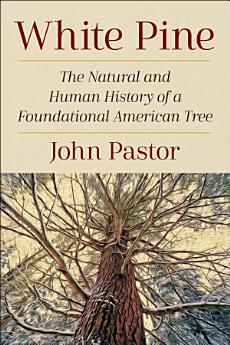
White Pine: The Natural and Human History of a Foundational American Tree
Jan 2023 · Island Press
Ebook
276
Pages
family_home
Eligible
info
About this ebook
America was built on white pine. From the 1600s through the Civil War and beyond, it was used to build the nation’s ships and houses, barns, and bridges. It became a symbol of independence, adorning the Americans’ flag at Bunker Hill, and an economic engine, generating three times more wealth than the California gold rush. Yet this popularity came at a cost: by the end of the 19th century, clear cutting had decimated much of America’s white pine forests. In White Pine: The Natural and Human History of a Foundational American Tree, ecologist and writer John Pastor takes readers on walk through history, connecting the white pine forests that remain today to a legacy of destruction and renewal.
Since the clear-cutting era, naturalists, foresters, and scientists have taken up the quest to restore the great white pine forests. White Pine follows this centuries-long endeavor, illuminating how the efforts shaped Americans’ understanding of key scientific ideas, from forest succession to the importance of fire. With his keen naturalist’s eye, Pastor shows us why restoring the vitality of these forests has not been simple: a host of other creatures depend on white pine and white pine depends on them. In weaving together cultural and natural history, White Pine celebrates the way humans are connected to the forest—and to the larger natural world.
Today, white pine forests have begun to recover, but face the growing threat of climate change. White Pine shows us that hope for healthy forests lies in understanding the lessons of history, so that iconic species survive as a touchstone for future generations.
America was built on white pine. From the 1600s through the Civil War and beyond, it was used to build the nation’s ships and houses, barns, and bridges. It became a symbol of independence, adorning the Americans’ flag at Bunker Hill, and an economic engine, generating three times more wealth tha...
Discover more
About the author
John Pastor is an ecologist and Professor Emeritus at the University of Minnesota, Duluth, where his teaching and research focused on the natural history and ecology of northern ecosystems. He is the author of What Should a Clever Moose Eat? and Mathematical Ecology of Populations and Ecosystems, is co-editor of Large Mammalian Herbivores, Ecosystem Dynamics, and Conservation, and has authored or coauthored 22 book chapters and over 120 papers, mostly about the North Woods. He is a past co-chair of the Natural History Section of the Ecological Society of America and founding editor of "The Scientific Naturalist" series in the journal Ecology.
John Pastor is an ecologist and Professor Emeritus at the University of Minnesota, Duluth, where his teaching and research focused on the natural history and ecology of northern ecosystems. He is the author of What Should a Clever Moose Eat? and Mathematical Ecology of Populations and Ecosystems,...
Rate this ebook
Tell us what you think.
Reading information
Smartphones and tablets
Install the Google Play Books app for Android and iPad/iPhone. It syncs automatically with your account and allows you to read online or offline wherever you are.
Laptops and computers
You can listen to audiobooks purchased on Google Play using your computer's web browser.
eReaders and other devices
To read on e-ink devices like Kobo eReaders, you'll need to download a file and transfer it to your device. Follow the detailed Help Center instructions to transfer the files to supported eReaders.