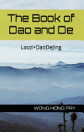
About this ebook
This bilingual edition, freshly translated by Xavier Peng, draws upon the authoritative Wang Bi (王弼 Wáng Bì) traditional‑character recension. Balancing literal fidelity and literary grace, the original translation avoids the extremes of rigid philology or overly free poetic adaptation. Each chapter opens with a concise introductory overview. Key philosophical terms appear with their traditional Chinese characters and toned pinyin upon first occurrence, removing language barriers for readers unfamiliar with classical Chinese.
Core concepts including Wuwei (無爲 Wúwéi, non‑action), Ziran (自然 Zìrán, natural spontaneity), and Pu (樸 Pǔ, the uncarved block) unfold through vivid imagery: water, valleys, infants and empty vessels. The text weaves cosmology, statecraft, anti‑war reflection, and inner‑self cultivation together. Four exclusive appendices supply character profiles, philosophical glossaries, cultural‑object references and moral‑concept explanations.
Suitable for first‑time readers and academic‑minded researchers alike, this volume bridges Eastern ancient wisdom and modern‑world reading habits, inviting audiences to reflect on harmony, moderation, yielding power and effortless living.
About the author
Laozi, also known as Li Er, was a great ancient Chinese philosopher, traditionally regarded as the author of Dao De Jing. His thoughts centered on the concept of Tao, advocating naturalness, non-action and humility. His work laid the foundation of Taoism, exerting profound and lasting influence on Chinese philosophy, culture and global spiritual thought over more than two thousand years.
Arthur Peng is a bilingual translator and researcher focusing on Chinese classics. He devotes himself to rendering ancient Chinese philosophical texts into readable modern English, preserving the original subtlety of meaning while making the wisdom accessible to international readers. This bilingual edition of Dao De Jing represents his effort to bridge Eastern and Western thought.