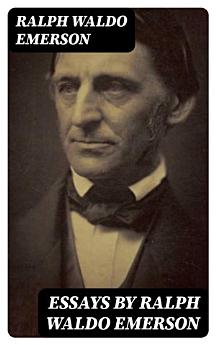
Essays by Ralph Waldo Emerson
Sep 2022 · DigiCat
Ebook
234
Pages
family_home
Eligible
info
About this ebook
In "Essays," Ralph Waldo Emerson presents a profound exploration of individuality, nature, and transcendental philosophy through a series of eloquent and insightful essays. Employing a distinctive literary style characterized by rich metaphor, lyrical prose, and a deeply personal voice, Emerson challenges readers to reconsider the relationship between the self and the cosmos. The essays, which include notable works such as "Self-Reliance" and "The Over-Soul," reflect the 19th-century transcendentalist movement, emphasizing the inherent goodness of both people and nature, while advocating for a radical departure from traditional societal norms and institutions. Ralph Waldo Emerson, an influential American essayist, philosopher, and poet, was a key figure in the transcendentalist movement, which sought to promote spirituality and self-actualization against the backdrop of industrialization and conformity. Drawing from his experiences in a Puritanical upbringing and his contemplative nature, Emerson's writings echo his belief in the importance of personal intuition and the divine interconnection among all beings. His insights are greatly shaped by his interactions with contemporaries such as Henry David Thoreau and Margaret Fuller, who furthered these philosophical ideals. "Essays" is not merely a collection of writings; it is an invitation to engage in profound self-reflection and to embrace one's unique path in the world. Emerson's work resonates with readers seeking inspiration in a time of uncertainty and overreach. This seminal text remains a cornerstone of American literature and philosophy, making it essential reading for anyone interested in the deeper meanings of life, personal growth, and spiritual awakening.
In "Essays," Ralph Waldo Emerson presents a profound exploration of individuality, nature, and transcendental philosophy through a series of eloquent and insightful essays. Employing a distinctive literary style characterized by rich metaphor, lyrical prose, and a deeply personal voice, Emerson c...
About the author
Ralph Waldo Emerson, born on May 25, 1803, in Boston, Massachusetts, remains a towering figure in American literature and philosophy. A leader of the transcendentalist movement, he championed individualism and was a critic of the countervailing pressures of society. Emerson attended Harvard, followed by the Harvard School of Divinity, and became an ordained minister, before eventually finding his calling as a writer and lecturer. His seminal essay collection, 'Essays by Ralph Waldo Emerson', includes some of his most influential works, such as 'Self-Reliance', 'The Over-Soul', and 'Nature'. In these essays, Emerson's literary style is characterized by its aphoristic quality, conveying his thoughts on the imperatives of self-trust, the divinity of the individual, and the universal mind. Emerson pursued themes such as the individual's relationship with nature, the critique of historical deadweight on innovation, and the importance of spiritual over material riches. His work not only influenced a generation of writers, including Henry David Thoreau and Walt Whitman, but also had a significant impact on emerging philosophies in America and the broader intellectual movement of the 19th century. His lectures and essays continueto resonate due to their rousing call for self-improvement and deep belief in the potential of each person. Emerson died on April 27, 1882, in Concord, Massachusetts, but his writings remain an enduring legacy, influencing thinkers and authors well beyond his time.
Ralph Waldo Emerson, born on May 25, 1803, in Boston, Massachusetts, remains a towering figure in American literature and philosophy. A leader of the transcendentalist movement, he championed individualism and was a critic of the countervailing pressures of society. Emerson attended Harvard, foll...
Rate this ebook
Tell us what you think.
Reading information
Smartphones and tablets
Install the Google Play Books app for Android and iPad/iPhone. It syncs automatically with your account and allows you to read online or offline wherever you are.
Laptops and computers
You can listen to audiobooks purchased on Google Play using your computer's web browser.
eReaders and other devices
To read on e-ink devices like Kobo eReaders, you'll need to download a file and transfer it to your device. Follow the detailed Help Center instructions to transfer the files to supported eReaders.