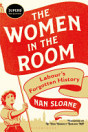
The Women in the Room: Labours Forgotten History
Sep 2018 · Bloomsbury Publishing
Ebook
288
Pages
About this ebook
In February 1900 a group of men representing trade unionists, socialists, Fabians and Marxists gathered in London to make another attempt at establishing an organisation capable of getting working-class men elected to Parliament. The body they set up was the Labour Representation Committee; six years later when 29 of its candidates were elected to the House of Commons it changed its name to the Labour Party.
No women took part in that first meeting, but several watched from the public gallery. Amongst them was Isabella Ford, an active socialist and trade unionist who would have been familiar to most of the men assembled below. She had been asked by her friend, Millicent Fawcett, to attend and report back on what happened. Millicent was the President of the National Union of Women's Suffrage Societies, and Isabella had been involved with the suffrage movement for a long time. A few years later she would become the first woman to speak at a Labour Party conference, moving a resolution on votes for women but, at the Party's inception in 1900, she and every other woman in the hall was silent.
Throughout Labour's history, even in its earliest years, women were present in the room, but they were not always recorded or remembered. They came from many different backgrounds and they worked for the causes they believed in as organisers, campaigners, negotiators, polemicists, public speakers and leaders. They took on the vested interests of their time; sometimes they won. Yet the vast majority of them have been forgotten by the Labour movement that they helped to found. Even Margaret Bondfield, who became Britain's first woman cabinet minister, often barely merits a footnote. Women made real and substantial contributions to Labour's earliest years and had a significant impact on the Party's ability to attract and maintain women's votes after World War I. In addition to Margaret and Isabella, in many of the rooms in which the Labour Party found its feet, remarkable women wait to be rediscovered. This book tells their story.
In February 1900 a group of men representing trade unionists, socialists, Fabians and Marxists gathered in London to make another attempt at establishing an organisation capable of getting working-class men elected to Parliament. The body they set up was the Labour Representation Committee; six y...
Discover more
About the author
Nan Sloane is the Director of the Centre for Women and Democracy. She is Training Coordinator of the Labour Women's Network, a former Labour councillor and Regional Director of the Labour Party. She is currently a member of Fawcett Society's 'Does Local Government work for women' Commission. She is the author In Our Own Words: A Dictionary of Women's Political Quotations; A Great Act of Justice: The Flapper Election and After and lead author of Sex & Power 2014: Who Runs Britain?
Nan Sloane is the Director of the Centre for Women and Democracy. She is Training Coordinator of the Labour Women's Network, a former Labour councillor and Regional Director of the Labour Party. She is currently a member of Fawcett Society's 'Does Local Government work for women' Commission. She ...
Rate this ebook
Tell us what you think.
Reading information
Smartphones and tablets
Install the Google Play Books app for Android and iPad/iPhone. It syncs automatically with your account and allows you to read online or offline wherever you are.
Laptops and computers
You can listen to audiobooks purchased on Google Play using your computer's web browser.
eReaders and other devices
To read on e-ink devices like Kobo eReaders, you'll need to download a file and transfer it to your device. Follow the detailed Help Center instructions to transfer the files to supported eReaders.