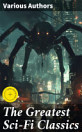
The Greatest Classics of Science Fiction
Jules Verne · Mark Twain · Robert Louis Stevenson · Edgar Allan Poe · William Hope Hodgson · George MacDonald · Jack London · Arthur Conan Doyle · Ayn Rand · David Lindsay · Edward Bellamy · Charlotte Perkins Gilman · Abraham Merritt · H. G. Wells · H. Rider Haggard · Mary Shelley · Edward Bulwer-Lytton · Edwin A. Abbott · Hugh Benson
Dec 2023 · DigiCat
Ebook
4354
Pages
family_home
Eligible
info
About this ebook
Dive into 'The Greatest Classics of Science Fiction,' a meticulously curated anthology that explores the evolution and expanse of the science fiction genre. This collection brings together a myriad of imaginative landscapes, speculative ideas, and profound narratives that have shaped and defined the genre over the years. From the speculative foresights of dystopian societies to pioneering adventures across time and space, the works within this volume offer a rich diversity of styles and themes. While each piece impresses with its distinct creativity, they collectively weave a tapestry that illuminates the innovative prowess inherent in science fiction. The anthology is a testament to the visionary spirit of its contributors, including celebrated authors such as Jules Verne and H. G. Wells, who have profoundly influenced the literary landscape. These authors, spanning various literary and cultural movements, such as Romanticism and Modernism, contribute unique perspectives to the genre. Through their storytelling, they address profound societal questions and universal human concerns, collectively enriching the thematic core of this collection. By embracing narratives from both well-known authors and visionary thinkers, the anthology presents a varied spectrum of voices, offering a complete exploration of early science fiction. For readers and scholars alike, 'The Greatest Classics of Science Fiction' offers a treasured opportunity to engage with an anthology that not only entertains but also challenges and enlightens. It invites an exploration into the multifaceted world of classic science fiction, where innovative storytelling sparks dialogue and deeper understanding. This collection stands as a valuable resource for anyone eager to traverse the vast terrains of futuristic imagination and insightful social commentary, making it an essential addition to any literary collection.
Dive into 'The Greatest Classics of Science Fiction,' a meticulously curated anthology that explores the evolution and expanse of the science fiction genre. This collection brings together a myriad of imaginative landscapes, speculative ideas, and profound narratives that have shaped and defined ...
Discover more
About the author
Jules Verne (1828–1905), a French novelist, poet, and playwright, is renowned for his adventure novels and his profound influence on the literary genre of science fiction. Born in Nantes, France, Verne manifested an early fascination with travel and exploration, a passion that spilled into his writing and endowed it with a sense of wonder and discovery. Verne's forays into literature took shape under the mentorship of influential writers such as Alexandre Dumas and Victor Hugo, and he quickly ascended to prominence as a master storyteller with the publication of seminal works like 'Journey to the Center of the Earth' (1864), 'Twenty Thousand Leagues Under the Sea' (1870), and 'Around the World in Eighty Days' (1873). A member of the group dubbed the 'Fathers of Science Fiction', Verne's novels were characterized by meticulous research and visionary scientific extrapolation. His 'Voyages Extraordinaires' series, of which 'The Greatest Classics of Science Fiction' could be a compendium, introduced readers to meticulously crafted worlds filled with submarines, space and air travel, long before such things were a reality. Verne's literary output was remarkable for its prescient technology and rousing adventure, often featuring resourceful protagonists and detailed depictions of the natural world. His work reveals an unflagging optimism about scientific progress and human ingenuity, securing his legacy as an author who not only entertained but also educated and inspired.
Jules Verne (1828–1905), a French novelist, poet, and playwright, is renowned for his adventure novels and his profound influence on the literary genre of science fiction. Born in Nantes, France, Verne manifested an early fascination with travel and exploration, a passion that spilled into his wr...
Rate this ebook
Tell us what you think.
Reading information
Smartphones and tablets
Install the Google Play Books app for Android and iPad/iPhone. It syncs automatically with your account and allows you to read online or offline wherever you are.
Laptops and computers
You can listen to audiobooks purchased on Google Play using your computer's web browser.
eReaders and other devices
To read on e-ink devices like Kobo eReaders, you'll need to download a file and transfer it to your device. Follow the detailed Help Center instructions to transfer the files to supported eReaders.