About this ebook
With a foreword by Michael Kowalski, Chairman of the Netherlands Intelligence Studies Association
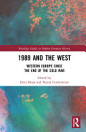
Many intelligence practitioners feel that the statutory footing on which intelligence agencies have been placed forms an impediment to confronting unprecedented contemporary challenges. On the basis of case studies spanning the period from the First World War to the present, this book argues that while the intelligence community in the era of globalization has indeed come to face new and complex challenges that require adaptation, operating in demanding and changing environments is not new at all. This book questions the conventional wisdom of 9/11 or the end of the Cold War as caesurae. It also argues that the ability to adapt, innovate, question and learn from past experience is crucial for the success of intelligence organizations, rather than ever-expanding funding.
Agencies’ ability to reflect, adapt and learn from experience determines their subsequent capability to deliver. One key development resulting from globalization is the marked increase in cooperation between intelligence agencies of different countries on the one hand, and between investigative agencies and intelligence agencies on the other. This has led to concerns over human rights and privacy and to increased calls for accountability and improved oversight as the increase in cooperation between organizations operating globally also provides scope for the circumvention of domestic restrictions.
This book proposes an instrument to assess the effectiveness of existing accountability arrangements and offers new insights into the role of (military) intelligence in a number of crises, e.g., the 1962 Cold War confrontation over Western New Guinea, and the functioning of intelligence in peacekeeping operations ranging from Srebrenica to Mali.
Thematically comprehensive, it offers a mixture of historical, legal, operational, and policy aspects, analyzed through the lens of institutional learning, bringing together academic and practitioners’ perspectives. The focus lies not only on the familiar Anglo-Saxon experience but also on cases from India, the Netherlands, South East Asia, Bosnia, Lebanon, and Mali.
The book is aimed at both scholars and practitioners studying and/or working in the field of civil and military intelligence, and those involved in international relations and international humanitarian law/human rights law. It brings together contributions from authors who spoke at the Conference to commemorate the 100th anniversary of the Dutch Military Intelligence and Security Service, organized by the Netherlands Intelligence Studies Association (NISA), and from a number of authors who were specifically invited to participate.
About the editors:
Floribert Baudet is Associate Professorof Strategy at the Netherlands Defence Academy in Breda; Eleni Braat is Assistant Professor at the Department of History and Art History at Utrecht University; Jeoffrey van Woensel is a military historian who works at the Veteraneninstituut in Doorn; and Aad Wever is an independent scholar who formerly worked at Saxion University of Applied Sciences in Enschede and Ferris State University, MI, USA, and who is now retired.
Specific to this book:
• Offers a mixture of historical, legal, operational, and policy aspects, analyzed through the lens of institutional learning• Brings together academic and practitioners’ perspectives• Focusses not only on the familiar Anglo-Saxon experience but also presents cases from India, the Netherlands, South East Asia, Bosnia, Lebanon, and Mali
With a foreword by Michael Kowalski, Chairman of the Netherlands Intelligence Studies Association
Many intelligence practitioners feel that the statutory footing on which intelligence agencies have been placed forms an impediment to confronting unprecedented contemporary challenges. On the basis ...
Discover more
About the author
Floribert Baudet is Associate Professor of Strategy at the Netherlands Defence Academy in Breda
Eleni Braat is Assistant Professor at the Department of History and Art History at Utrecht University
Jeoffrey van Woensel is a military historian who works at the Veteraneninstituut in Doorn
Aad Wever is an independent scholar who formerly worked at Saxion University of Applied Sciences in Enschede and Ferris State University, MI, USA, and who is now retired
Floribert Baudet is Associate Professor of Strategy at the Netherlands Defence Academy in Breda
Eleni Braat is Assistant Professor at the Department of History and Art History at Utrecht University
Jeoffrey van Woensel is a military historian who works at the Veteraneninstituut in Doorn
Aad Weve...
Rate this ebook
Tell us what you think.
Reading information
Smartphones and tablets
Install the Google Play Books app for Android and iPad/iPhone. It syncs automatically with your account and allows you to read online or offline wherever you are.
Laptops and computers
You can listen to audiobooks purchased on Google Play using your computer's web browser.
eReaders and other devices
To read on e-ink devices like Kobo eReaders, you'll need to download a file and transfer it to your device. Follow the detailed Help Center instructions to transfer the files to supported eReaders.