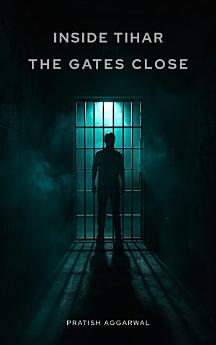
About this ebook
novel that takes readers behind the walls of one of
South Asia's most notorious prisons. Blending realism,
emotional depth, and social commentary, the novel
explores the hidden world of incarceration through the
eyes of Arjun Malhotra, an ordinary man whose life is
shattered after a wrongful conviction sends him to
prison.
As Arjun enters the harsh and unforgiving environment
of Tihar, he encounters a complex society operating
behind bars a world governed not only by official rules
but also by invisible hierarchies, inmate alliances,
corruption, survival instincts, and unexpected acts of
humanity. What begins as a struggle for survival
gradually becomes a journey of transformation.
Inside the prison, Arjun meets men from vastly different
backgrounds: hardened criminals, first-time offenders,
intellectuals, gang members, corrupt officials, and
prisoners desperately seeking redemption. Through
these relationships, he learns that prison is far more
than a place of punishment. It is a reflection of society
itself, exposing questions about justice, power,
morality, and the human capacity for change.
As months turn into years, Arjun witnesses violence,
grief, loyalty, betrayal, friendship, and resilience. He
discovers that the greatest battles are often fought
within the mind and that hope can survive even in thedarkest circumstances. While fighting to prove his
innocence, he must also confront the emotional cost of
separation from his family, the loss of time, and the
challenge of preserving his identity inside a system
designed to reduce people to numbers.
Part I follows Arjun's complete prison journey from the
shock of imprisonment to the friendships that sustain
him, from moments of despair to hard-earned wisdom,
and ultimately to the day the prison gates finally open.
Yet freedom comes with a profound realization: leaving
prison is not the same as leaving its impact behind.
Powerful, realistic, and emotionally compelling, Inside
Tihar explores themes of justice, wrongful
imprisonment, redemption, human dignity, institutional
failure, and the enduring strength of hope. It is a story
about survival, but more importantly, it is a story about
remaining human when every circumstance
encourages the opposite.
Part I ends when the gates open. The real challenge
begins afterward.
Discover more
About the author
About the Author
Pratish Aggarwal is a Bachelor of Ayurvedic Medicine and Surgery (BAMS) student with a strong passion for research, writing, and the study of human behaviour. His academic background in medical sciences, combined with a deep interest in criminology and psychology, has shaped a unique perspective that blends scientific understanding with compelling storytelling.
Pratish's work explores the complexities of the human mind, criminal behavior, social dynamics, and the psychological factors that influence decision-making. Through extensive research and analytical thinking, he strives to present complex subjects in a manner that is both informative and engaging for readers.
In addition to nonfiction works on criminology and psychology, Pratish is also dedicated to writing realistic novels inspired by real-life events, social issues, and human experiences. His stories are characterized by emotionally believable characters, moral complexity, authentic dialogue, and thought-provoking themes that encourage readers to reflect on society and human nature.
As an emerging author, Pratish Aggarwal aims to bridge the gap between academic knowledge and accessible literature. His mission is to educate, inspire, and engage readers through works that combine factual depth with compelling narratives.
Through his books, Pratish continues to explore the fascinating intersections of medicine, psychology, criminology, and storytelling, offering readers insightful perspectives on both the human mind and the world around them.