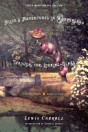
Further Nonsense Verse And Prose: Restored Classics to Go Edition

· Otbebookpublishing
Ebook
104
Pages
Eligible

About this ebook

This collection reveals Lewis Carroll as far more than the creator of Alice: it is a rich gathering of poems, prose, satire, acrostics, and whimsical miscellany that showcases his delight in wordplay, technical precision, and the logic of childhood imagination. A biographical introduction traces Charles Lutwidge Dodgson from a gifted, inventive boy who staged puppet shows, edited homemade magazines, and won early praise for his intelligence, to a sensitive Oxford man whose literary life intertwined with photography, friendship, clerical duty, and a deep, if selective, affection for children. It also explains the origin of the Lewis Carroll pseudonym and the summer rowing trip that gave birth to Alice in Wonderland, later followed by Through the Looking-Glass, Sylvie and Bruno, and other playful works. Along the way, the book defends Carroll's nonsense as carefully designed art, not mere absurdity, and closes with affectionate reflections on his death, burial, and enduring legacy. The volume ends in characteristic style with "Maggie's Visit to Oxford" and a comic, satirical tale of vanity, longing, and self-dramatizing fantasy. This edition has been fully restored with modern typesetting, custom cover design.
This collection reveals Lewis Carroll as far more than the creator of Alice: it is a rich gathering of poems, prose, satire, acrostics, and whimsical miscellany that showcases his delight in wordplay, technical precision, and the logic of childhood imagination. A biographical introduction traces ...

About the author

Lewis Carroll, the pen name of Charles Lutwidge Dodgson, was born in 1832 in rural England and spent much of his life at Oxford, where he worked as a mathematician, lecturer, and photographer while quietly building one of the most distinctive literary imaginations in English literature. Though trained in logic and mathematics, he became celebrated for writing that seemed to delight in overturning logic itself, creating playful worlds of word games, riddles, absurd characters, and dreamlike adventures that continue to enchant readers of all ages. His best-known achievements helped redefine children's literature by treating nonsense not as empty whimsy but as a serious artistic mode, one that could expose the strange rules governing language, authority, and adult society. Beneath the humor and inventiveness, his work often explores identity, transformation, time, memory, and the uneasy boundary between order and chaos, themes that still feel strikingly modern in a world saturated with shifting realities and competing meanings. Carroll's legacy endures because he showed that literature could be intellectually rigorous and joyfully anarchic at once, inviting readers to question assumptions while laughing at the absurdity of everyday life. Today, he remains especially rewarding for readers who love clever language, imaginative fantasy, and stories that are as thought-provoking as they are playful.

Lewis Carroll, the pen name of Charles Lutwidge Dodgson, was born in 1832 in rural England and spent much of his life at Oxford, where he worked as a mathematician, lecturer, and photographer while quietly building one of the most distinctive literary imaginations in English literature. Though tr...

Rate this ebook

Tell us what you think.

Reading information

Smartphones and tablets
Install the Google Play Books app for Android and iPad/iPhone. It syncs automatically with your account and allows you to read online or offline wherever you are.
Laptops and computers
You can listen to audiobooks purchased on Google Play using your computer's web browser.
eReaders and other devices
To read on e-ink devices like Kobo eReaders, you'll need to download a file and transfer it to your device. Follow the detailed Help Center instructions to transfer the files to supported eReaders.