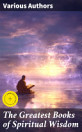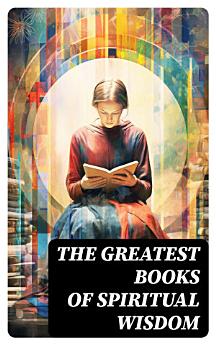
The Greatest Books of Spiritual Wisdom: The Age of Reason, As a Man Thinketh, The Holy Spirit...
Martin Luther · John Stuart Mill · David Hume · James Allen · Ralph Waldo Emerson · Andrew Murray · Thomas Paine · Ludwig Feuerbach · G. K. Chesterton · Friedrich Nietzsche · Thomas à Kempis · Leo Tolstoy · Charles Spurgeon · Wallace D. Wattles · Prentice Mulford · St. Teresa of Ávila · Saint Augustine · Florence Scovel Shinn · H. Emilie Cady · Gregory of Nyssa · Pope Gregory I · Athanasius of Alexandria · Basil the Great · John of Damascus · Saint Thomas Aquinas · Brother Lawrence · Arthur Pink
Nov 2023 · DigiCat
Ebook
10232
Pages
family_home
Eligible
info
About this ebook
The Greatest Books of Spiritual Wisdom is a profound anthology that captures the rich tapestry of spiritual and philosophical thought across the ages. This collection weaves together a diverse array of texts, featuring an impressive spectrum of literary styles, from reflective meditations to persuasive treatises. The works within this volume traverse the domains of spiritual guidance, existential inquiry, and moral philosophy, offering insights that are as relevant today as they were when first penned. Among the standout pieces are those that challenge the human spirit towards introspection and upliftment, shedding light on the universal quest for meaning and truth. The anthology brings together eminent voices from an array of historical and cultural backgrounds, including the contemplative reflections of the Church Fathers, the rational discourses of Enlightenment thinkers, and the transcendental musings of 19th-century philosophers. Their collective contributions underpin movements such as the Reformation, Romanticism, and Transcendentalism, demonstrating the timeless interplay between spiritual exploration and philosophical inquiry. These varied voices enrich the anthology, offering readers a holistic approach to understanding the human condition from multiple vantage points. This volume provides readers with a unique opportunity to explore a multifaceted conversation on spirituality and wisdom. The diverse perspectives compiled within offer a rich educational experience, granting insights into diverse philosophical and theological traditions. The Greatest Books of Spiritual Wisdom invites readers to engage with these texts not only for their intellectual merit but also for the introspective dialogue they foster. This anthology is a treasured compendium that resonates with anyone seeking to deepen their understanding of spirituality and humanity.
The Greatest Books of Spiritual Wisdom is a profound anthology that captures the rich tapestry of spiritual and philosophical thought across the ages. This collection weaves together a diverse array of texts, featuring an impressive spectrum of literary styles, from reflective meditations to pers...
Discover more
About the author
Martin Luther (1483–1546) was a seminal figure in the Protestant Reformation that swept across Europe in the 16th century. A German monk, theologian, university professor, and church reformer, Luther's writings and ideas would forever alter the landscape of Christian thought and practice. Best known for his doctrine of justification by faith alone, his translation of the Bible into the vernacular, and his 95 Theses, which he nailed to the door of the Wittenberg Castle church, Luther's work challenged the Roman Catholic Church and initiated a vast religious movement. Though Luther himself did not write a book titled 'The Greatest Books of Spiritual Wisdom,' his vast literary contributions include the 'Commentary on the Epistle to the Galatians' (Luther, 1535) and 'The Bondage of the Will' (Luther, 1525), which have been held in high regard by theologians and scholars, and reflect Luther's pursuit of spiritual wisdom through scriptural engagement and personal faith. His literary style is characterized by its dialectical approach, vigor, and directness, which aimed to make complex theological ideas accessible to the laity. Through his written legacy, Luther's influence extends beyond theology and into the domains of language, literature, and education, affirming his place as one of the pivotal figures in Western intellectual history.
Martin Luther (1483–1546) was a seminal figure in the Protestant Reformation that swept across Europe in the 16th century. A German monk, theologian, university professor, and church reformer, Luther's writings and ideas would forever alter the landscape of Christian thought and practice. Best kn...
Rate this ebook
Tell us what you think.
Reading information
Smartphones and tablets
Install the Google Play Books app for Android and iPad/iPhone. It syncs automatically with your account and allows you to read online or offline wherever you are.
Laptops and computers
You can listen to audiobooks purchased on Google Play using your computer's web browser.
eReaders and other devices
To read on e-ink devices like Kobo eReaders, you'll need to download a file and transfer it to your device. Follow the detailed Help Center instructions to transfer the files to supported eReaders.