About this ebook
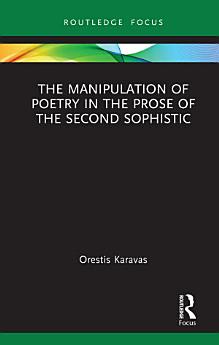
It provides readers with a new interpretive framework for understanding the use and manipulation of quotations from classical poets, including Homer, Hesiod, and Pindar, among others, by Greek authors writing under Rome. Through close philological analysis, systematic classification of examples, and detailed case studies of authors of the Second Sophistic such as Plutarch, Lucian, Dio Chrysostom and Aelius Aristides, the book demonstrates how altered quotations functioned as sophisticated rhetorical strategies within elite paideia, offering tools applicable to the study of Imperial prose, intertextuality, and ancient literary culture more broadly.
This volume is suitable for students and scholars working on the Second Sophistic and Greek literature in the Roman Empire, as well as those interested in ancient rhetoric and classical literature more broadly.
Discover more
About the author
Orestis Karavas was born in Athens, Greece. Since 2005 he has taught at the University of the Peloponnese (Kalamata, Greece), where he is currently an Associate Professor. He has published widely on the literature of Imperial Rome and the epic poetry of Later Antiquity.