About this ebook
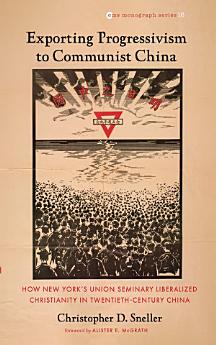
Using new archival research, this book shows how Union Theological Seminary exported progressive Christianity to Communist China. Founded in 1836, the New York seminary disseminated its version of Christianity to China through its alumni. From 1911 to 1949, 196 Union alumni went to China. Thirty-nine of these former students were Chinese nationals. Many of these Chinese students--such as Y. T. Wu (Wu Yaozong), K. H. Ting (Ding Guangxun), John Sung (Song Shangjie), and Timothy Tingfang Lew (Liu Tingfang)--became key leaders in the Sino-Foreign Protestant Establishment and the Three-Self Patriotic Movement. The school became a dense hub of influential Chinese and American Christians. Union's role in liberalizing and indigenizing Christianity in twentieth-century China has been largely unnoticed, until now.
Using new archival research, this book shows how Union Theological Seminary exported progressive Christianity to Communist China. Founded in 1836, the New York seminary disseminated its version of Christianity to China through its alumni. From 1911 to 1949, 196 Union alumni went to China. Thirty-...
Discover more
About the author
Christopher D. Sneller is a lecturer in missional theology at Houston Christian University and director of innovation at Bridges International.
Christopher D. Sneller is a lecturer in missional theology at Houston Christian University and director of innovation at Bridges International.
Rate this ebook
Tell us what you think.
Reading information
Smartphones and tablets
Install the Google Play Books app for Android and iPad/iPhone. It syncs automatically with your account and allows you to read online or offline wherever you are.
Laptops and computers
You can listen to audiobooks purchased on Google Play using your computer's web browser.
eReaders and other devices
To read on e-ink devices like Kobo eReaders, you'll need to download a file and transfer it to your device. Follow the detailed Help Center instructions to transfer the files to supported eReaders.