Economies of Praise: Value, Labor, and Form in Seventeenth-Century English Poetry
Mar 2024 · Northwestern University Press
Ebook
256
Pages
About this ebook
Reevaluates early modern poems of praise as, paradoxically, challenging an artistic economy that values exchange and productivity
Early modern poems of praise typically insist that they do not have a purpose or enact real labor beyond their effortless listing of laudable qualities. And yet the poets discussed in this study, including Ben Jonson, Andrew Marvell, Anne Bradstreet, Lucy Hutchinson, and John Milton, hint at an alternative aesthetic economy at work in their verse. Poetic praise, it turns out, might show us a social world outside the organizing principle of exchange.
In Economies of Praise: Value, Labor, and Form in Seventeenth‐Century English Poetry, Ryan Netzley explores how poems of praise imagine alternatives to market and gift economies and point instead to a self-contained aesthetic economy that works against a more expansive and productivist understanding of literary art. By depicting exchange as inconsequential, unproductive, and redundant rather than a necessary constituent of social order, these poems model for modern readers a world without the imperative to create, appraise, and repeatedly demonstrate one’s own value.
Reevaluates early modern poems of praise as, paradoxically, challenging an artistic economy that values exchange and productivity
Early modern poems of praise typically insist that they do not have a purpose or enact real labor beyond their effortless listing of laudable qualities. And yet the p...
About the author
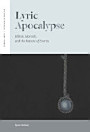
RYAN NETZLEY is a professor of English at Southern Illinois University, Carbondale. He is the author of Lyric Apocalypse: Milton, Marvell, and the Nature of Events and Reading, Desire, and the Eucharist in Early Modern Religious Poetry.
RYAN NETZLEY is a professor of English at Southern Illinois University, Carbondale. He is the author of Lyric Apocalypse: Milton, Marvell, and the Nature of Events and Reading, Desire, and the Eucharist in Early Modern Religious Poetry.
Rate this ebook
Tell us what you think.
Reading information
Smartphones and tablets
Install the Google Play Books app for Android and iPad/iPhone. It syncs automatically with your account and allows you to read online or offline wherever you are.
Laptops and computers
You can listen to audiobooks purchased on Google Play using your computer's web browser.
eReaders and other devices
To read on e-ink devices like Kobo eReaders, you'll need to download a file and transfer it to your device. Follow the detailed Help Center instructions to transfer the files to supported eReaders.